Imagine your customer service chatbot suddenly starts leaking sensitive employee salaries. Or worse, it begins offering financial advice that violates federal regulations. In traditional IT, this might be a configuration error. In the world of artificial intelligence, it’s likely an AI-introduced defect or a sophisticated attack vector like prompt injection. Standard cybersecurity playbooks often fail here because they look for malware signatures or network breaches, not subtle shifts in model behavior or corrupted training data.
As organizations deploy generative AI at scale, the line between a software bug and a security incident blurs. An AI model hallucinating facts isn't just 'wrong'; it can be a symptom of data poisoning. This shift demands a new approach to incident response-one that understands the unique architecture of machine learning systems.
Why Traditional Incident Response Fails AI Systems
Traditional incident response relies on detecting known bad actors, malicious code, or unauthorized access attempts. These methods work well for servers and databases but fall short with AI. Why? Because AI systems are probabilistic, not deterministic. They don't execute commands in a linear fashion; they generate outputs based on patterns learned from vast datasets.
When an AI system behaves unexpectedly, it’s rarely due to a single point of failure. It could be:
- Model Drift: The model’s performance degrades over time as real-world data differs from training data.
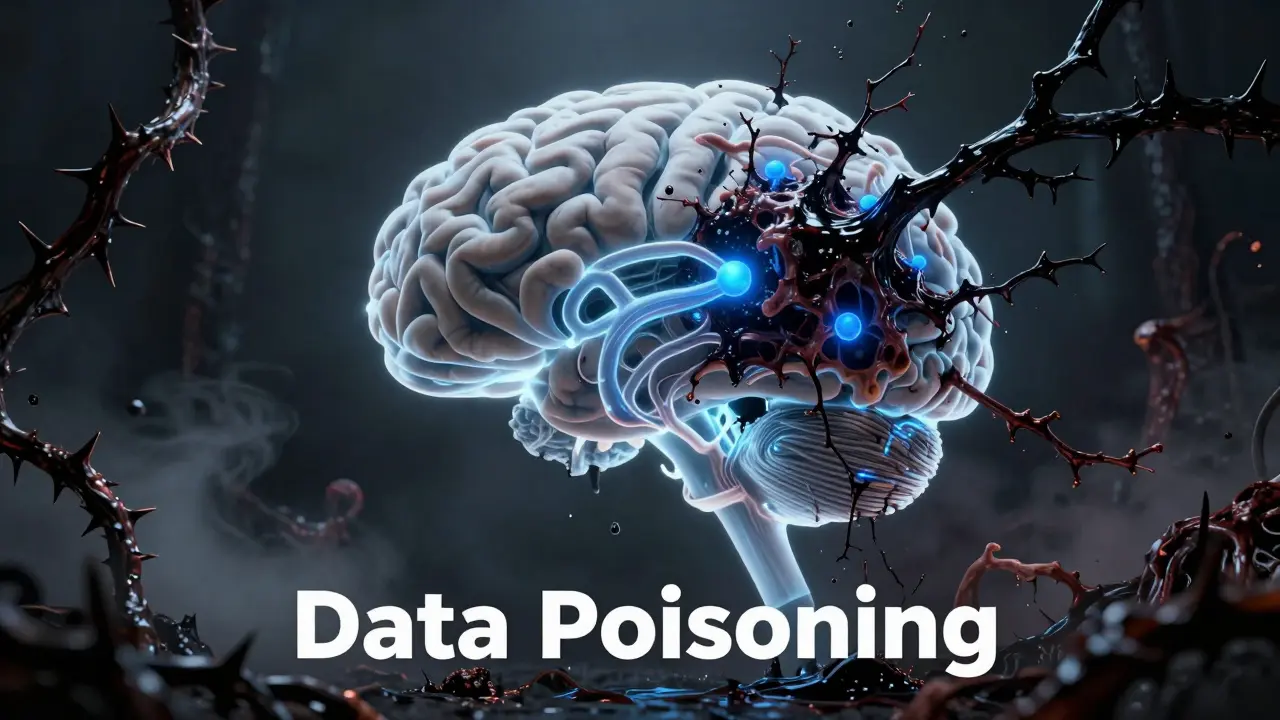
- Data Poisoning: Malicious inputs were injected into the training set, corrupting the model’s foundational knowledge.
- Prompt Injection: Users manipulate the input to bypass safety guardrails, forcing the AI to perform unintended actions.
The Coalition for Secure AI (CoSAI) recognized this gap and released the AI Incident Response Framework, Version 1.0, which adapts the NIST incident response lifecycle specifically for AI. This framework acknowledges that AI incidents require specialized telemetry, different containment strategies, and unique recovery procedures.
Identifying AI-Specific Threat Vectors
To respond effectively, you first need to know what you’re looking for. AI systems face distinct threat categories that don’t exist in traditional software. Understanding these vectors is crucial for detection and analysis.
| Attack Type | Description | Impact |
|---|---|---|
| Training Data Poisoning | Malicious actors contaminate datasets used to train models. | Compromised model integrity from the foundation; biased or harmful outputs. |
| Prompt Injection | Manipulating user inputs to produce unintended outputs or bypass safeguards. | Data leakage, unauthorized actions, or generation of harmful content. |
| Memory Injection (MINJA) | Targeting memory components of AI systems to alter context or state. | Loss of contextual accuracy, persistent manipulation of ongoing sessions. |
| RAG Poisoning | Injecting malicious information into Retrieval-Augmented Generation databases. | AI retrieves and cites false or dangerous information as fact. |
| SSRF via AI | Abusing cloud credentials through Server-Side Request Forgery vulnerabilities in AI infrastructure. | Privilege escalation, access to internal resources, or resource jacking. |
Each of these attacks leaves different traces. For instance, data poisoning might only reveal itself through gradual model drift, while prompt injection can cause immediate, erratic behavior. Recognizing these differences helps teams triage incidents faster.
Preparation: Building Your AI Defense Foundation
You can’t respond to what you can’t see. Preparation is the most critical phase of AI incident response. Unlike traditional IT, where asset inventories list servers and endpoints, AI preparation requires mapping out models, datasets, and inference pipelines.
Start by creating a comprehensive inventory of all AI assets deployed across your organization. This includes large language models, computer vision systems, and custom machine learning pipelines. Next, establish an AI Security Incident Response Team (AISIRT). This team should include members with expertise in both cybersecurity and machine learning operations (MLOps).
Crucially, implement continuous monitoring that captures AI-specific telemetry. Traditional security tools log network traffic and file changes, but they miss:
- Prompt Logs: Records of all user inputs sent to AI systems.
- Inference Activity: Tracking system outputs and decision-making processes.
- Tool Executions: Actions taken by AI agents, such as API calls or database queries.
- Memory State Changes: Modifications to AI system knowledge bases or context windows.
This telemetry is your early warning system. Without it, you’re flying blind when anomalies occur.
Detection and Analysis: Spotting the Anomalies
Detecting AI incidents requires moving beyond signature-based detection. Since AI attacks often involve novel techniques, rule-based systems will miss them. Instead, leverage AI-powered Security Operations Centers (SOCs) that use behavior modeling and anomaly detection.
Look for specific indicators of compromise:
- Unexpected Model Drift: Sudden or gradual deviations from expected performance metrics. If a sentiment analysis model suddenly rates positive reviews as negative, investigate immediately.
- Suspicious Prompt Patterns: Inputs that resemble jailbreak attempts or multi-channel injection sequences. These often contain contradictory instructions or encoded payloads.
- Unusual Retrieval Behaviors: In RAG systems, monitor for frequent retrievals of obscure or newly added documents, which may indicate database contamination.
Intelligent triage systems can cluster related events, eliminate duplicate alerts, and highlight probable root causes. This reduces alert fatigue and allows analysts to focus on high-severity incidents. Remember, every AI-triggered security response should carry a unique trace ID with full reasoning context, enabling auditors to reconstruct decisions months later.
Containment, Eradication, and Recovery
Once an incident is detected, containment strategies must align with AI architecture. You can’t simply 'patch' a neural network. Instead, consider these options:
- Rollback: Revert to a previous, verified model version if recent updates introduced defects.
- Purge Memory: Clear poisoned context or memory states from active sessions.
- Rebuild Databases: For RAG systems, rebuild vector databases after removing malicious entries.
- Isolate Components: Disconnect compromised AI agents from critical infrastructure to prevent lateral movement.
The CoSAI framework provides ready-to-use playbooks written in the OASIS CACAO standard. These cover scenarios like responding to multi-channel prompt injections or mitigating RAG poisoning. Using standardized workflows ensures consistency and speed during high-pressure situations.
Automated incident response modules within SOCs can orchestrate these steps according to predefined risk thresholds. For example, if a prompt injection attempt is detected, the system can automatically shut down the affected endpoint and lock associated accounts. Automation reduces response times from minutes to seconds, limiting potential damage.

Post-Incident Learning and Governance
An incident isn’t over until you’ve learned from it. Post-incident analysis should focus on strengthening defenses against similar attacks. Share findings across teams to build organizational knowledge. Did the attack exploit a lack of input validation? Was the training dataset insufficiently vetted?
Invest in long-term improvements:
- Vulnerability Identification Tools: Develop or acquire tools that help researchers discover AI-specific weaknesses.
- Secure Development Training: Train AI developers on secure coding practices, including input sanitization and output filtering.
- Responsible Disclosure: Establish community standards for reporting AI vulnerabilities, similar to coordinated vulnerability disclosure in traditional software.
Regularly test your response capabilities. Conduct quarterly drills simulating AI-specific scenarios, such as data leakage or model manipulation. Measure success by containment time-aim for critical incidents contained within 30 minutes-and ensure 100% of responders are trained on AI-specific protocols.
Key Stakeholders in AI Incident Response
Effective AI incident response requires collaboration across multiple departments. Identify key stakeholders early:
- Incident Response Teams: Lead plan development and execution.
- MLOps Engineers: Provide technical expertise on model architecture and deployment.
- Communications: Manage external messaging and stakeholder notifications during public-facing incidents.
- Legal and Compliance: Address regulatory implications, especially regarding data privacy and industry-specific mandates.
Aligning these groups ensures a cohesive response that addresses technical, operational, and legal dimensions of AI incidents.
What is the CoSAI AI Incident Response Framework?
The CoSAI AI Incident Response Framework, Version 1.0, is a standardized guide developed by the Coalition for Secure AI. It adapts traditional NIST incident response lifecycles to address the unique challenges of AI systems, including data poisoning, prompt injection, and model drift. It provides playbooks and best practices for preparation, detection, containment, and recovery.
How do I detect prompt injection attacks?
Prompt injection attacks can be detected by monitoring for suspicious input patterns, such as contradictory instructions, encoded payloads, or attempts to bypass safety filters. AI-powered SOC tools using behavior modeling can identify anomalies in user prompts that deviate from normal usage patterns. Implementing strict input validation and rate limiting also helps mitigate these risks.
What is data poisoning in AI systems?
Data poisoning occurs when malicious actors intentionally contaminate the training datasets used to develop AI models. This compromises the model's integrity, leading to biased, inaccurate, or harmful outputs. Prevention involves rigorous data validation, anomaly detection in datasets, and using diverse, representative training sources.
Why is traditional incident response insufficient for AI?
Traditional incident response focuses on deterministic systems with clear signs of compromise, like malware or unauthorized access. AI systems are probabilistic and complex, making failures harder to pinpoint. Issues like model drift or subtle bias shifts don't leave traditional forensic traces, requiring specialized telemetry and behavioral analysis instead.
How can organizations prepare for AI-specific incidents?
Preparation involves creating an inventory of AI assets, establishing an AI-focused incident response team, and implementing monitoring for AI-specific telemetry (prompt logs, inference activity). Organizations should also develop playbooks for common threats like prompt injection and data poisoning, and conduct regular drills to test response effectiveness.