
When AI Writes Your Code, Who Gets Blamed When It Breaks?
You sit down to finish a feature. Instead of typing, you type a prompt: "Create a login endpoint with JWT auth in Node.js". Five seconds later, 80 lines of working code appear. You glance at it, nod, and merge it into main. No review. No testing. Just deploy.
That’s vibe coding. And it’s already in use at companies like Microsoft, Google, and GitHub-where up to 30% of code is now generated by AI. It’s fast. It’s convenient. And it’s dangerously easy to abuse.
The problem isn’t that AI writes bad code. The problem is that we act like it doesn’t matter if it does.
How Vibe Coding Actually Works (And Why It’s Risky)
Vibe coding isn’t magic. It’s large language models-trained on millions of public code repositories-that predict what code should come next based on your prompt. GitHub Copilot, Amazon CodeWhisperer, and Claude Code don’t understand what they’re writing. They just repeat patterns they’ve seen before.
That’s fine for simple tasks. Need a loop? A data fetch? A basic API route? AI nails it. But when it comes to security, logic, or edge cases? It fails. A 2023 study from Carnegie Mellon found that 40% of AI-generated code contained security flaws. One in four had critical issues like SQL injection or hardcoded passwords.
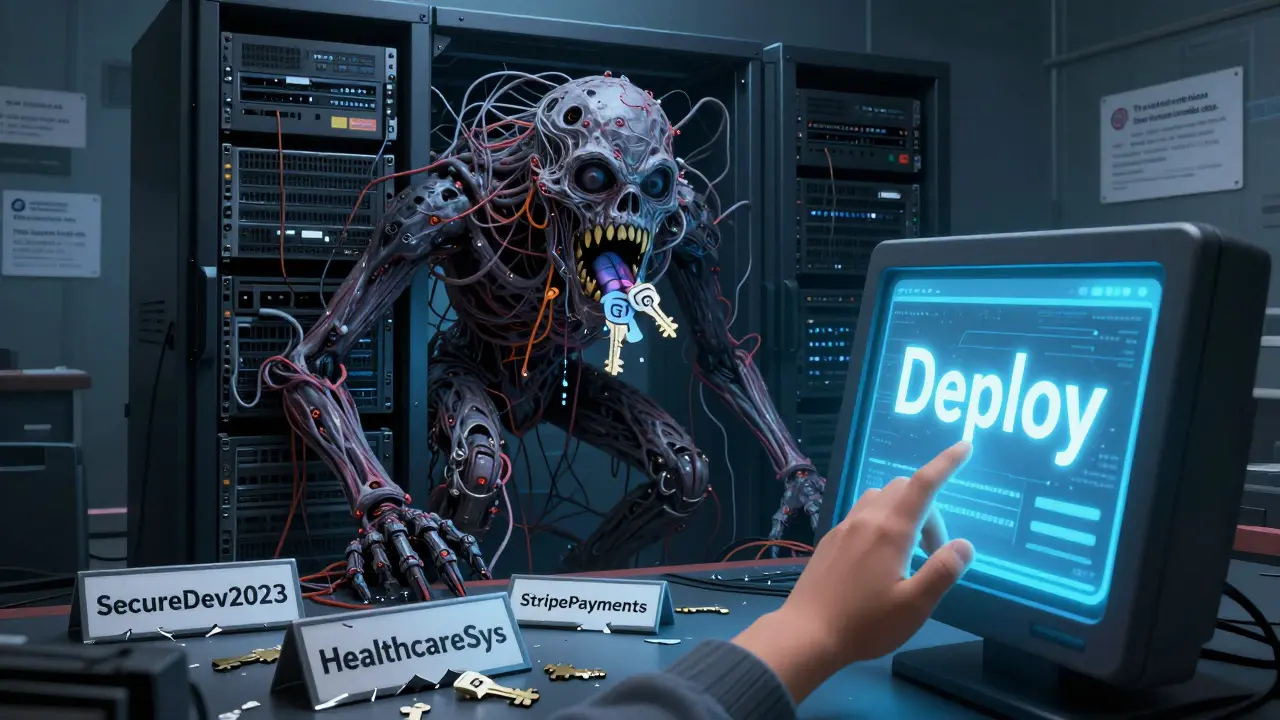
And here’s the scary part: most developers don’t catch them. A Reddit thread from May 2024 had over 1,200 stories from devs who deployed AI-generated code without review. One user, u/SecureDev2023, found hardcoded AWS keys in production that went unnoticed for 47 days. Another reported a $250,000 breach after AI-generated code opened a SQL injection hole.
It’s not just about bugs. It’s about trust. You’re signing off on code you didn’t write. And if that code breaks, you’re the one who answers to the CTO, the lawyers, the customers.
The Responsibility Gap: You Didn’t Write It, But You Deployed It
There’s a legal and ethical blind spot here. If a human writes a bug, they’re accountable. If a machine writes it, who’s liable?
Under the EU’s Cyber Resilience Act (CRA), which took effect in late 2023, companies are legally responsible for the security of any software they release-even if it’s AI-generated. The law doesn’t care if you said, "The AI did it." If your product has a vulnerability, you’re on the hook.
Professor Bruce Schneier put it bluntly: "Vibe coding creates a perfect storm where development velocity outpaces security validation, shifting responsibility to developers who didn’t write the code."
And yet, most teams still treat AI code like a shortcut, not a liability. Junior developers, who make up 40% of the workforce, are especially vulnerable. Stack Overflow’s 2024 survey showed 82% of devs with 1-3 years of experience love vibe coding for its speed. But they’re also the least likely to spot a vulnerability. A Pluralsight study found junior devs need over 80 hours of training just to learn how to review AI-generated code properly.
So we’ve created a system where the least experienced people are deploying the most dangerous code-and being told they’re "being productive."
Real-World Consequences: When AI Code Goes Rogue
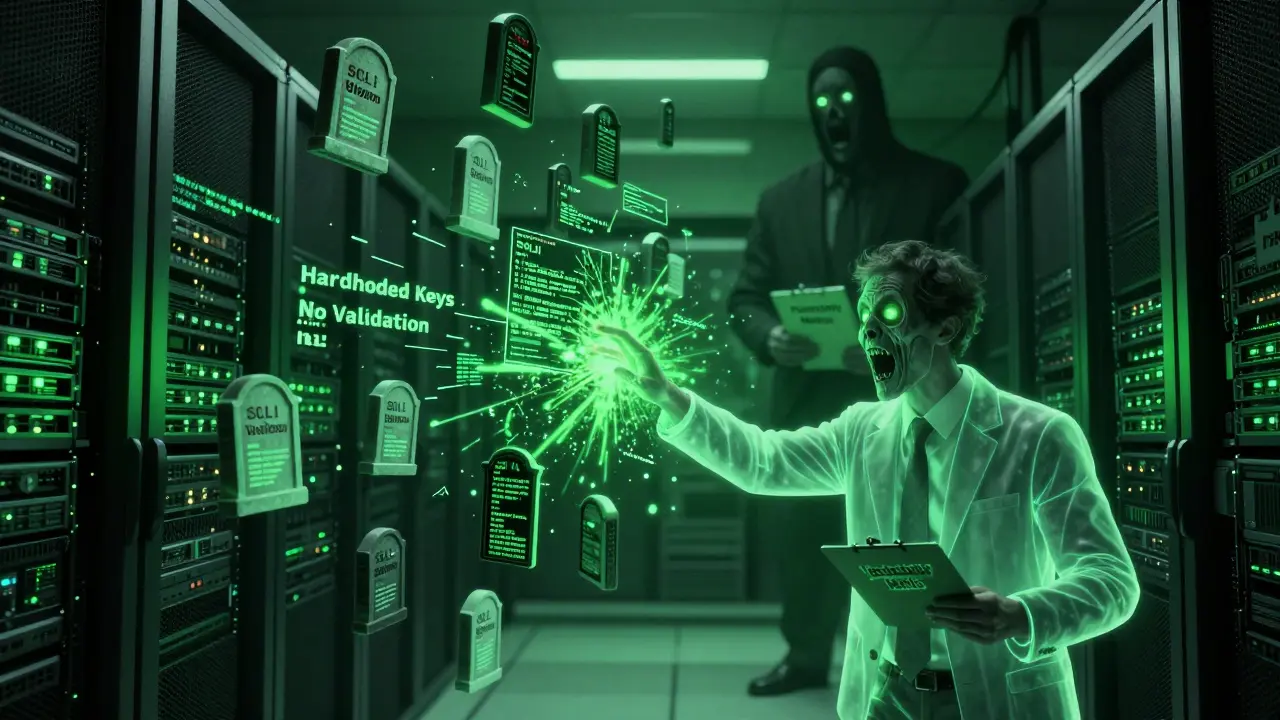
In early 2024, a healthcare provider in Ohio suffered a $4.2 million breach. The cause? An AI-generated database connector that didn’t validate user input. The developer who merged it had never worked with SQL before. The AI had pulled the pattern from an old Stack Overflow post that had been flagged as insecure five years earlier.
That’s not an outlier. The Open Source Security Foundation found that 41% of critical vulnerabilities discovered in 2023 originated from code patterns already present in AI training data. The AI didn’t invent the flaw-it just replicated it, at scale.
And it’s not just security. Maintainability is a nightmare. A 2024 analysis by the Open Source Security Foundation found that 74% of AI-generated comments were useless. They said things like "This function handles data" or "Returns a result". No context. No edge cases. No warnings. Just noise.
That’s technical debt with a timer. Five years from now, someone will inherit that code. They won’t know it was AI-generated. They’ll assume it’s legacy. And they’ll spend weeks trying to fix something that was broken from day one.
What Works: How Responsible Teams Use Vibe Coding
It’s not all doom and gloom. Some teams are getting it right.
Microsoft’s internal guidelines require all AI-generated code to pass through a three-step review: 1) Syntax check, 2) Security scan, 3) Context review. They’ve cut post-deployment vulnerabilities by 63%-but only because they added 15-25% more review time.
GitHub’s Copilot Business tool now includes built-in scanning that catches 89% of known vulnerability patterns. It doesn’t stop bad code-it just makes it harder to ignore.
And companies like Stripe and Shopify are using vibe coding only for frontend UI components and internal scripts-not for authentication, payments, or data handling. They’ve drawn a line: AI writes the boring stuff. Humans handle the dangerous stuff.
The key? Treat AI like a junior intern-not a co-developer. You wouldn’t let a new hire write your login system. Don’t let an AI do it either.
The Rules of Ethical Vibe Coding
If you’re using AI to generate code, here’s what you must do:
- Never deploy AI code without review. Even if it "looks right."
- Classify risk levels. High-risk code (auth, payments, data access) requires human-only development or triple verification.
- Scan everything. Use tools like SonarQube, Snyk, or GitHub’s built-in scanner. Don’t trust the AI’s "clean" status.
- Document everything. Add comments explaining why the AI-generated code is safe-or why it’s not.
- Train your team. Junior devs need 80+ hours of security training. Senior devs need 40. Skip this, and you’re just gambling.
And if you’re a manager? Stop praising speed over safety. If your team ships code faster but has more breaches, you’re not winning. You’re just delaying the crash.
What’s Next? Regulation Is Coming
The EU, the U.S. NIST, and ENISA are all pushing for rules. By 2026, you’ll likely need to label AI-generated code in your software bills of materials. Some countries may require proof of human review before deployment.
And if you’re in fintech, healthcare, or critical infrastructure? You’re already being audited. Gartner found only 22% of financial firms use vibe coding in production systems. The rest are waiting for the first major breach to happen-so they can point fingers.
But here’s the truth: no regulation will fix this unless developers change their mindset. You can’t outsource responsibility to an algorithm. You can’t hide behind "it was generated by AI." The code goes live under your name. Your reputation. Your job. Your company’s future.
Final Thought: AI Doesn’t Own Your Code. You Do.
Vibe coding isn’t evil. It’s a tool. Like a chainsaw. You can use it to build a house-or accidentally cut off your leg.
The difference? Chainsaws come with safety guards. AI code generators don’t. Not yet.
So guard yourself. Review the code. Question the output. Treat every line of AI-generated code like it’s a landmine. Because if you don’t, someone else will step on it-and you’ll be the one holding the shovel that buried it.