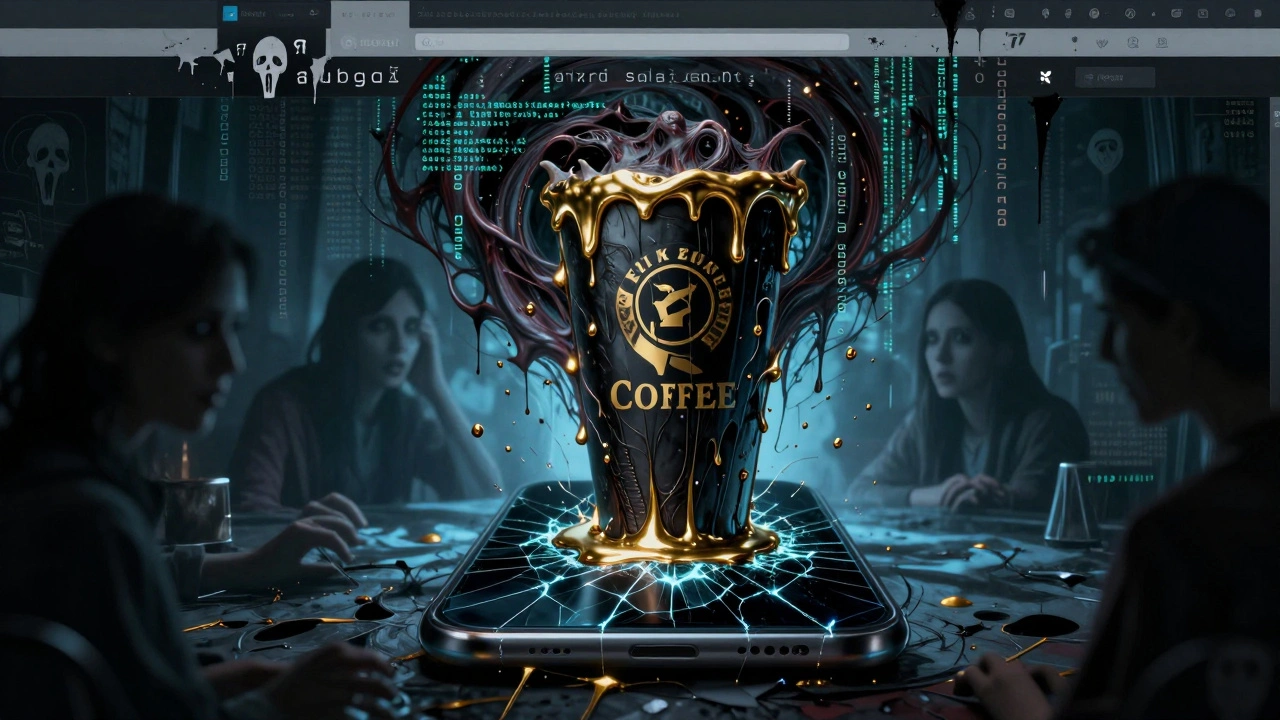
Imagine this: you spend months building your brand identity - the logo, the colors, the slogan. You register the trademark. You’ve got customers. Then one day, you find a product online using your exact logo - but it wasn’t you. It was generated by an AI tool. Someone typed “logo for a luxury coffee brand, sleek, minimalist, gold accent” into Midjourney, and out came a near-perfect copy of your mark. No human designed it. No one asked you. And now, customers are confused. Some think you’re behind it. Others think you’re copying someone else. Welcome to the new reality of trademark and generative AI.
AI Doesn’t Know What a Trademark Is - But It Copies Them Anyway
Generative AI tools like DALL-E, Midjourney, and Stable Diffusion don’t understand trademarks. They don’t know the difference between a protected brand and a random word. They just learn from billions of images, logos, and text snippets scraped from the web. And guess what? The internet is full of registered trademarks. According to Common Crawl data from 2023, models like GPT-4 were trained on over 300 billion web pages - many of them containing logos, brand names, and packaging designs. So when you ask an AI to “create a logo like Nike,” it doesn’t say no. It pulls the swoosh shape, the font, the color scheme - and spits out a version that looks real enough to fool people. Testing by AALRR law firm in early 2024 showed that when users prompt AI with generic brand descriptors like “luxury handbag,” “sportswear logo,” or “tech company icon,” AI systems generate content confusingly similar to existing trademarks in 12-18% of cases. That’s not a glitch. It’s a feature of how these models work. They predict what’s statistically common. And if Nike’s swoosh appears millions of times online, the AI will learn to recreate it - even if it’s never been told to.Trademark Law Wasn’t Built for This
Traditional trademark law, like the U.S. Lanham Act, protects brands by preventing consumer confusion. To win a case, you have to prove that someone’s use of a similar mark is likely to make people think the product comes from you - or is approved by you. But AI-generated content doesn’t always get used in commerce. What if someone creates a fake Rolex logo in Midjourney just for fun? No one sells it. No website uses it. Is that infringement? The answer? Maybe not. But here’s the catch: if that same image gets posted on Etsy, Instagram, or a fake product page, suddenly it’s “use in commerce.” And that’s where the trouble starts. The U.S. Patent and Trademark Office (USPTO) still hasn’t fully clarified whether AI-generated content can infringe trademarks if no human intended it. But courts are starting to act. In the Hermès v. Rothschild case, a jury awarded $133,000 in February 2023 after finding that AI-generated “MetaBirkins” images diluted Hermès’ famous Birkin bag trademark - even though the images were digital art, not physical bags. The court said: if the public sees it and thinks it’s connected to the brand, the damage is done.Big Brands Are Getting Hit - and Small Businesses Are Paying the Price
Fortune 500 companies are spending millions on AI trademark monitoring tools. But small businesses? They’re on their own. A Reddit user in November 2024 shared how they used Midjourney to design a logo for their new coffee shop. The result looked identical to a registered trademark owned by a national chain. They got a cease-and-desist letter. They had to rebrand. Lost $8,500. Lost three weeks of marketing. Lost customers who thought they were the real thing. This isn’t rare. GitHub’s AI ethics forum logged 47 verified cases in 2024 where developers using AI for logo design faced trademark threats. Sixty-three percent said the platforms gave no warning. Canva’s AI tools, used by millions, have an average rating of 2.8 out of 5 on Trustpilot - mostly because users don’t realize their “unique” design is a copy. One user, “DesignPro99,” wrote: “I generated a logo for my coffee shop, only to discover it resembled an existing chain’s mark - lost 3 weeks and $2,000 in the process.”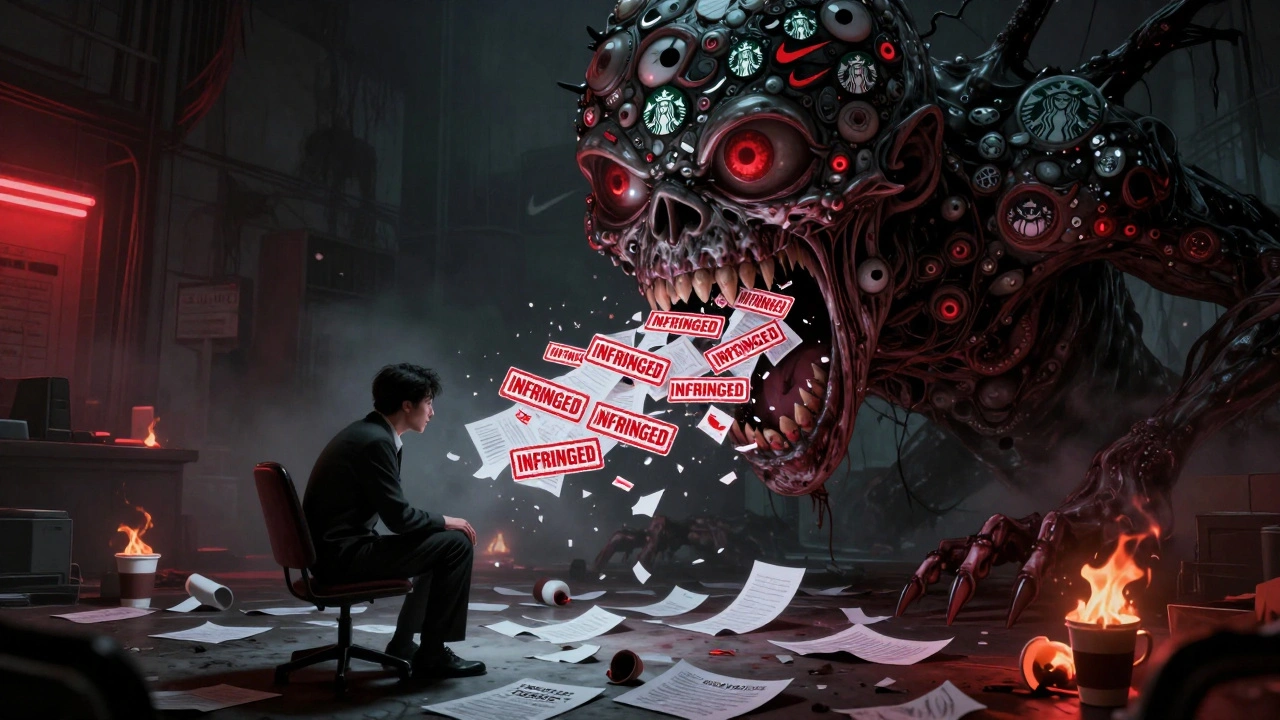
There’s a Way to Protect Yourself - If You Act Now
The good news? You don’t have to wait for new laws. There are steps you can take today.- Avoid brand names in prompts. Never type “create a logo like Apple” or “logo similar to Starbucks.” Use abstract descriptions: “minimalist circular icon, green and white, clean lines.”
- Run reverse image searches. Before you launch, upload your AI-generated logo to Google Images or TinEye. If it shows up next to a registered trademark, walk away.
- Check the USPTO database. Go to tmsearch.uspto.gov. Search by keyword, design code, or image. If your logo looks even remotely similar to a registered mark, it’s risky.
- Document everything. Save your prompts, versions, and timestamps. In the Hermès case, the defendant’s detailed logs helped prove intent - or lack thereof. You need the same paper trail.
- Use AI tools with built-in protection. Adobe Firefly’s “Trademark Shield” feature cross-checks your design against the USPTO database in real time. Companies using it report an 89% drop in infringement incidents, according to Adobe’s 2025 case studies.
The Market Is Changing Fast - And So Are the Rules
The global market for AI trademark monitoring tools hit $187 million in 2024 and is expected to grow to $643 million by 2027. Big brands are already investing in enterprise solutions like Corsearch AI Monitor, which costs $42,000 a year but catches 92% of AI-generated infringements. Google Alerts? It only finds 17%. That’s not enough. Regulations are catching up. The EU’s AI Act, effective in 2024, requires high-risk AI systems to implement “trademark compliance measures.” California’s AB-331, which took effect January 1, 2025, forces AI-generated content to be labeled - meaning if your logo was made by AI, you have to say so. That doesn’t stop infringement, but it gives brands a way to track it. Meanwhile, the U.S. is lagging. The USPTO’s latest guidance in August 2025 says AI-generated marks can be registered if a human controls the “expressive elements.” But that doesn’t help if someone else’s AI copied your mark. And lawsuits are piling up. Louis Vuitton sued an AI art generator in March 2025 - the first case asking whether the tool itself can be liable for trademark dilution.
What’s Next? The Fight Over Responsibility
Who’s at fault here? The person who typed the prompt? The company that built the AI? The platform that didn’t warn them? AI developers say: “It’s the user’s responsibility.” Stability AI’s legal team argues that tools are like cameras - you can use them to take a photo of a copyrighted painting, but that doesn’t make the camera maker liable. Brand owners say: “You built a machine that copies us. You should fix it.” A 2024 survey by the American Intellectual Property Law Association found 61% of corporate lawyers want stricter AI rules - but 82% of AI developers oppose them. The divide is real. And until Congress or the courts step in, businesses are stuck in the middle.You Can’t Wait for the Law to Save You
The truth is, trademark law was never designed for a world where machines generate logos, slogans, and packaging without human intent. But the damage is already happening. Consumers are confused. Brands are losing money. Small businesses are getting crushed. You don’t need to be a lawyer to protect your brand. You just need to be smart. Treat AI like a wild animal - powerful, unpredictable, and dangerous if left uncontrolled. Don’t use brand names in prompts. Check your designs. Use tools that screen for infringement. Document everything. And if you see your brand being copied by AI, act fast. Don’t wait for a lawsuit. Don’t hope it goes away. The future of branding isn’t just about creativity anymore. It’s about control. And if you don’t take control now, someone else’s AI will take it for you.Can AI-generated logos be trademarked?
Yes - but only if a human exercises enough control over the design. The USPTO’s August 2025 guidance says AI-generated marks can be registered if a person selects, arranges, or modifies the elements. You can’t just run a prompt and claim ownership. You need to show you shaped the final output.
Is it trademark infringement if AI copies my logo but no one sells it?
Not necessarily. Trademark law requires “use in commerce.” If the AI-generated copy is just sitting on someone’s hard drive or used in a personal project, it’s unlikely to be infringement. But if it’s posted online, used in ads, or sold - even digitally - it crosses the line. Courts look at whether the public could be confused, not just whether money changed hands.
Can I sue an AI company for copying my trademark?
It’s very difficult right now. Most lawsuits target the human user, not the AI tool. But that’s changing. The Louis Vuitton v. AI Art Generator case (filed March 2025) is testing whether platforms can be held directly liable for enabling infringement. If courts rule yes, it could shift the legal landscape dramatically.
How do I check if my AI-generated design infringes a trademark?
Do three things: 1) Search the USPTO database (tmsearch.uspto.gov) using keywords and design codes. 2) Run a reverse image search with Google Images or TinEye. 3) Use tools like Adobe Firefly’s Trademark Shield, which checks against live trademark records. Don’t rely on free tools like Google Alerts - they miss over 80% of AI-generated copies.
What’s the biggest mistake businesses make with AI and trademarks?
Using brand names in prompts. Saying “create a logo like Nike” or “make a slogan like Coca-Cola” is like handing the AI a blueprint. Even if you don’t use the result, the AI learns from it - and may reproduce it later. Always use abstract, descriptive prompts. Avoid any mention of existing brands.
Destiny Brumbaugh
December 14, 2025 AT 23:56And stop pretending it's 'just a glitch' - it's sabotage by tech bros who think they're smarter than the law.
Sara Escanciano
December 15, 2025 AT 07:02Elmer Burgos
December 15, 2025 AT 10:50Maybe the tools should just pop up a warning like 'Hey this resembles a registered mark' - not everyone's a lawyer. We're all learning how to use this stuff. No need to be harsh.
Jason Townsend
December 15, 2025 AT 14:19They're building a digital prison and you're handing them the keys with every prompt.
Antwan Holder
December 17, 2025 AT 06:14And who pays? Not the billionaires who built the AI. Not the tech giants who sold it. But you. The small business owner who stayed up till 3am designing a logo that now belongs to a ghost.
The trademark isn't broken. The entire system is. We're not fighting corporations anymore. We're fighting ghosts. And ghosts don't have addresses. They don't have lawyers. They just... exist. And they copy everything.
Angelina Jefary
December 17, 2025 AT 12:40Also, 'use in commerce' isn't just about selling. Posting it publicly online is commercial use under current case law. The author missed that. Grammar police out.
Jennifer Kaiser
December 18, 2025 AT 09:53There's dignity in doing the work. In sketching. In researching. In understanding why a shape works. The AI didn't steal your brand. We did. We stopped caring about the process. And now we're surprised when the system eats the soul of what we built.
TIARA SUKMA UTAMA
December 18, 2025 AT 22:22