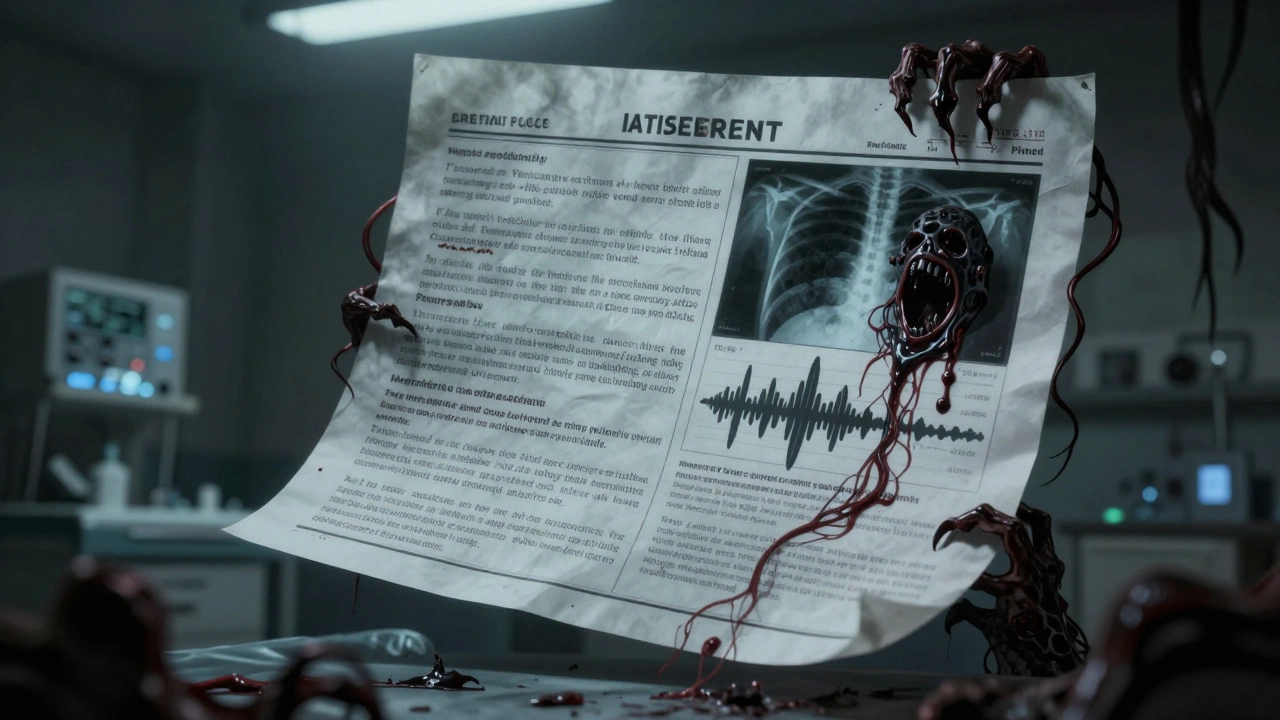
Imagine an AI generates a medical report that looks perfect-clear text, accurate charts, even a realistic X-ray image. But the X-ray shows a tumor that doesn’t exist. The text says the patient has a condition they don’t have. The audio summary sounds natural, but misstates the dosage. No automated system catches it. This isn’t science fiction. It’s happening today in hospitals and labs using multimodal generative AI.
These systems combine text, images, audio, and video to create outputs that feel real. But their inner workings? Hidden. They don’t explain how they reached a conclusion. That’s why human review isn’t optional anymore-it’s the last line of defense.
Why Automated Systems Fail at Multimodal AI Quality Control
Automated tools like rule-based filters or simple anomaly detectors work fine for single-mode outputs-like checking grammar in text or brightness in an image. But when you mix modalities, things break.
Think of it like a chef who can read a recipe (text), see a photo of the dish (image), hear the sizzle (audio), and smell the spices (sensor data). Now imagine they’re asked to recreate it without knowing how the ingredients were measured or when they were added. That’s what multimodal AI does. It blends signals into a shared space where text, image, and sound lose their individual meaning. The output looks right, but the logic is opaque.
Meta AI’s 2024 documentation confirms this: systems can generate fluent, coherent outputs without traceable reasoning. N-iX’s research shows these systems operate in “dense shared latent spaces”-a fancy way of saying the AI’s brain is a black box where inputs get mashed together and outputs pop out with no clear path back.
That’s why 70-75% accuracy from traditional QC tools isn’t enough. In biopharma, a single false positive can trigger a costly recall. In manufacturing, a missed defect can cause a machine failure. Human review closes that gap.
The 5M Framework: Building a Verifiable Foundation
Effective human review doesn’t mean just looking at outputs and hoping for the best. It requires structure. The 5M QC framework-Man, Machine, Method, Material, Measurement-isn’t new. It’s been used in manufacturing for decades. But now, it’s being adapted for AI.
- Man: Who reviews? Are they trained? Do they understand the domain? A nurse reviewing a radiology report needs different training than a lab technician reviewing chemical synthesis data.
- Machine: What tools are used? Is the AI model grounded? Does it pull from verified sources? Systems like TetraScience’s use retrieval-augmented pipelines to ensure every claim can be traced back to a reference.
- Method: What’s the checklist? What questions are asked? A checklist for drug manufacturing might ask: “Does the AI-generated batch record match the SOP?” or “Is the spectrogram consistent with the expected chemical reaction?”
- Material: What data is fed in? Are the images, audio clips, or text inputs clean and properly labeled? Garbage in, garbage out-even for AI.
- Measurement: How do you know it’s right? Metrics matter. TetraScience achieved a 0.90 F1 score-meaning 90% precision and recall-in their biopharma pilot by combining AI validation with human review.
Without this structure, human review becomes chaotic. Reviewers miss things. They get tired. They disagree. That’s why 78% of users on G2 Crowd rate “comprehensive verification workflows” as the top strength of multimodal AI QC tools.
Designing Human Review Checklists That Work
A good checklist isn’t a laundry list. It’s a decision tree.
Here’s what a real-world checklist for biopharma looks like:
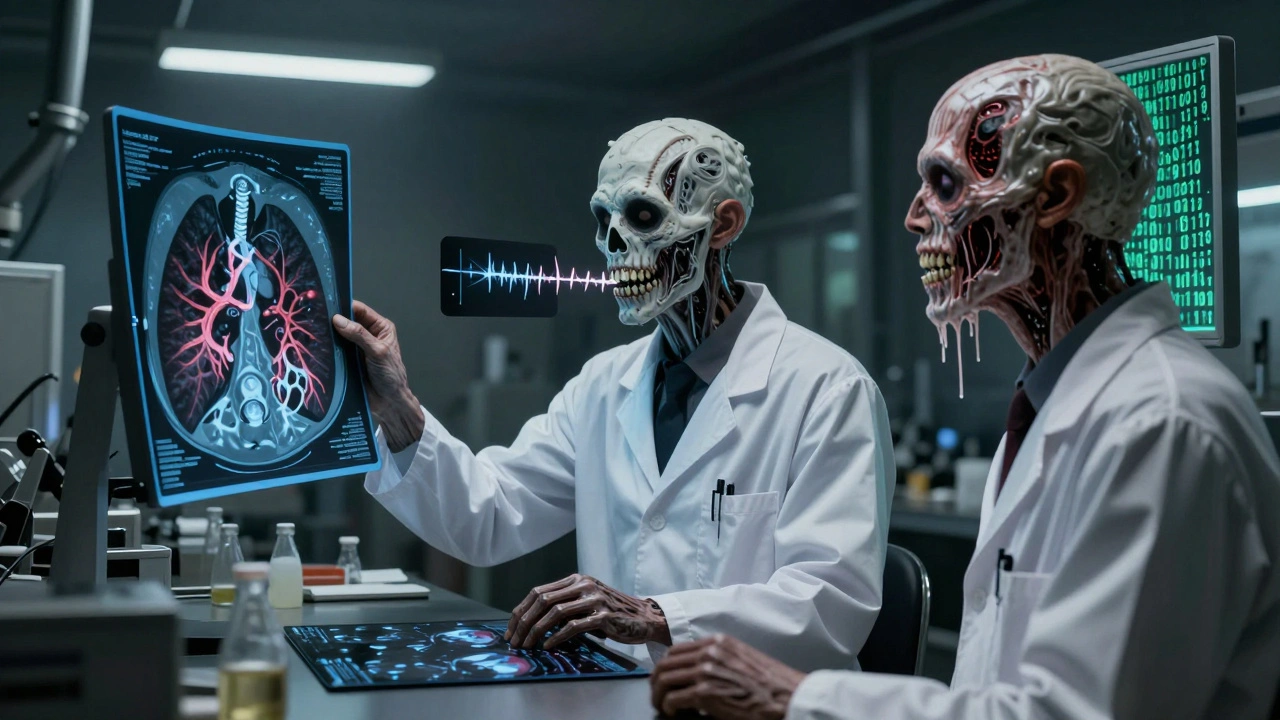
- Does the text description match the image? (e.g., “tumor in left lung” vs. visible mass in CT scan)
- Is the audio summary consistent with the text? (e.g., does it say “5 mg” when the text says “50 mg”?)
- Are all references cited and verifiable? (e.g., does the AI quote a published study? Can we find it?)
- Are there contradictions between modalities? (e.g., image shows normal tissue, but sensor data shows abnormal heat signature)
- Is the output within expected parameters? (e.g., drug concentration within ±5% of standard)
- Does the output violate known safety rules? (e.g., contraindicated drug combination flagged by FDA database)
Siemens used a 17-point checklist across five product lines. It took three review cycles to standardize. But once done, false positives dropped by 29%. The key? Making each item binary: yes/no, present/absent, match/mismatch.
For manufacturing, checklists might include:
- Does the visual defect detected by YOLO model match the audio vibration pattern?
- Is the temperature reading from the IoT sensor consistent with the thermal image?
- Does the AI-generated maintenance report align with the equipment’s historical log?
These aren’t guesses. They’re based on ontologies-structured knowledge graphs that define what “normal” looks like in your domain. Without them, checklists are just random questions.
When Human Review Doesn’t Work (And What to Do Instead)
Human review isn’t magic. It has limits.
IBM Research found that when reviewers handle more than 100 multimodal outputs per shift, error detection drops from 92% to 67%. That’s alert fatigue. Humans get numb. They skim. They assume.
And if there’s no clear source of truth? Forget it. If you’re generating marketing copy based on vague social media trends, there’s no “right answer.” Human review here is pointless.
So when should you skip human review?
- High-volume, low-risk outputs (e.g., social media captions)
- No stable ground truth exists
- Cost of error is negligible
- Real-time generation is required (e.g., live video captioning)
Instead, use AI filtering. Meta AI’s November 2024 update flags 89% of problematic outputs before human review. That’s a game-changer. Use AI to triage: send only high-risk items to humans.
AuxilioBits’ manufacturing case showed that priority scoring reduced review volume by 45% while keeping defect detection at 99.2%. That’s the sweet spot: AI does the heavy lifting. Humans focus on the hard cases.
What’s Changing in 2025
The landscape is shifting fast.
In April 2024, the FDA mandated human-in-the-loop verification for all AI-generated content in biopharma submissions. That’s not a suggestion-it’s law. By 2025, that’s creating a $1.1 billion market.
Gartner predicts 65% of enterprises will use hybrid AI-human review by Q4 2025, up from 22% in 2024. By 2027, 85% of enterprise multimodal AI deployments will require it.
New tools are emerging. TetraScience’s October 2024 update lets reviewers see the AI’s reasoning chain in under two seconds: “This output was based on image A, text B, and sensor C. The link between them was X.” That’s huge. It turns review from guesswork into verification.
NIST’s AI Verification Framework (Version 2.0, coming Q2 2025) will standardize verification across seven dimensions-meaning companies won’t have to reinvent the wheel. That’s the next big leap.
What You Need to Start
If you’re thinking about implementing this:
- Start with one high-risk use case. Don’t try to boil the ocean. Pick one process where an error could cost money, time, or safety.
- Build your ontology. Define your concepts, relationships, and rules. This takes 3-6 months. Don’t skip it.
- Design your checklist. Keep it simple. Focus on contradictions, consistency, and compliance.
- Train your reviewers. Use real examples. Show them what a bad output looks like.
- Use AI to filter. Let machines flag the risky stuff. Humans should only see what matters.
- Measure everything. Track false positives, review time, error rates. Adjust as you go.
Companies like TetraScience and AuxilioBits didn’t succeed because they had better AI. They succeeded because they treated human review as a system-not an afterthought.
Final Thought
Multimodal generative AI is powerful. But power without control is dangerous. The best AI systems don’t replace humans-they empower them. Human review isn’t about slowing things down. It’s about making sure what’s generated is safe, accurate, and trustworthy.
Ask yourself: Would you let an AI write your medical diagnosis? Would you trust it to approve a drug batch? If not, then why are you letting it generate anything without a human looking at it?
Why can't automated tools fully replace human review in multimodal AI?
Automated tools struggle because multimodal AI blends text, images, audio, and video into a single, uninterpretable internal representation. While they can detect obvious errors like blurry images or typos, they can’t spot subtle contradictions-like a text saying “patient has diabetes” while the glucose trend graph shows normal levels. Humans catch these inconsistencies because they understand context, intent, and domain rules. No algorithm can fully replicate that.
What industries benefit most from human-reviewed multimodal AI QC?
Regulated industries with high stakes see the biggest gains. Biopharmaceuticals lead because of FDA requirements-human review is now mandatory for AI-generated submissions. Manufacturing follows closely, especially in precision equipment where a missed defect can cause safety failures. Healthcare diagnostics, aerospace, and nuclear energy also rely heavily on this approach. Consumer apps like social media filters don’t need it-unless they’re handling sensitive content like medical imagery.
How long does it take to implement a human review system for multimodal AI?
It’s not quick. Developing ontologies and taxonomies takes 3-6 months. Fine-tuning models like Google’s Gemini Pro to align with your domain adds another 2-4 months. Training reviewers and integrating workflows takes 1-2 months. Total time: 6-12 months. But the payoff is in reduced errors, compliance, and trust-not speed. Rushing leads to flawed systems.
Can human reviewers be biased, and how do you prevent it?
Yes. MIT’s 2025 AI Ethics Report warns that without standardized checklists, human reviewers can introduce unconscious bias-like favoring certain image styles or dismissing outputs from unfamiliar sources. To prevent this, use blind reviews (hide origin of output), rotate reviewers, and audit decisions. Also, train reviewers on cognitive biases. Standardized protocols from NIST’s upcoming framework will help reduce this risk across the industry.
What’s the difference between an ontology and a checklist in AI quality control?
An ontology defines the rules of your domain: what concepts exist, how they relate, and what’s valid. For example, in biopharma, an ontology defines “active pharmaceutical ingredient,” “batch record,” and “QC test.” A checklist is a set of yes/no questions based on that ontology. The ontology is the rulebook. The checklist is the inspection form. You need both. Without the ontology, the checklist is meaningless. Without the checklist, the ontology stays theoretical.
Is human review too expensive for small businesses?
It can be-but only if done wrong. Small manufacturers or startups don’t need full-scale TetraScience setups. Start with one high-risk output type. Use free or low-cost tools like open-source vision models (YOLO) and simple checklists. Prioritize outputs using AI scoring to limit human review to only 10-20% of total output. Many mid-sized manufacturers (250-999 employees) are adopting this approach at 37% YoY growth. Cost isn’t the barrier-lack of structure is.
What metrics should I track to measure success?
Track four key metrics: (1) F1 score-precision and recall of error detection; (2) false positive rate-how often humans flag something that’s actually fine; (3) review time per output-aim to reduce this over time; and (4) regulatory non-conformances-how many errors slip through to audits or submissions. TetraScience’s system achieved 90% F1 score and a 63% drop in FDA non-conformances. Those are the numbers that matter.



Sally McElroy
December 14, 2025 AT 07:43This isn't just about AI-it's about surrendering judgment to machines that don't understand suffering, ethics, or consequence. We're outsourcing morality to algorithms that can't even define 'right' or 'wrong.' The fact that hospitals are even considering this without a national moratorium is terrifying. We're not improving healthcare-we're automating negligence.
Destiny Brumbaugh
December 15, 2025 AT 12:14lol at all this overthinking. if the ai says the patient has a tumor and it turns out its wrong then its just a mistake. people make mistakes all the time. doctors misdiagnose all the time. why is this any different. stop acting like ai is the devil just because it aint human. also who cares if the audio says 5mg instead of 50mg? someone shoulda double checked. its not the ai's job to babysit your incompetence
Sara Escanciano
December 16, 2025 AT 23:02They want us to trust AI-generated medical reports but won't let us see how they work? That's not innovation-that's fraud. You're giving machines the power to decide life or death and calling it 'quality control.' No one's asking for perfection. But you can't have opacity and accountability in the same sentence. This is how you get mass casualties disguised as progress. The FDA didn't mandate human review because they're cautious-they're terrified of what's already happened in secret.
Elmer Burgos
December 18, 2025 AT 17:19I get where everyone's coming from but I think we're missing the middle ground here. AI isn't perfect but it's not the enemy either. The real issue is how we're using it. If you pair good checklists with smart filtering and trained reviewers, you get way better results than either humans or machines alone. I've seen it in action. It's not about replacing people-it's about giving them better tools. Less fatigue, more focus, fewer errors. That's the win.
Jason Townsend
December 20, 2025 AT 04:21