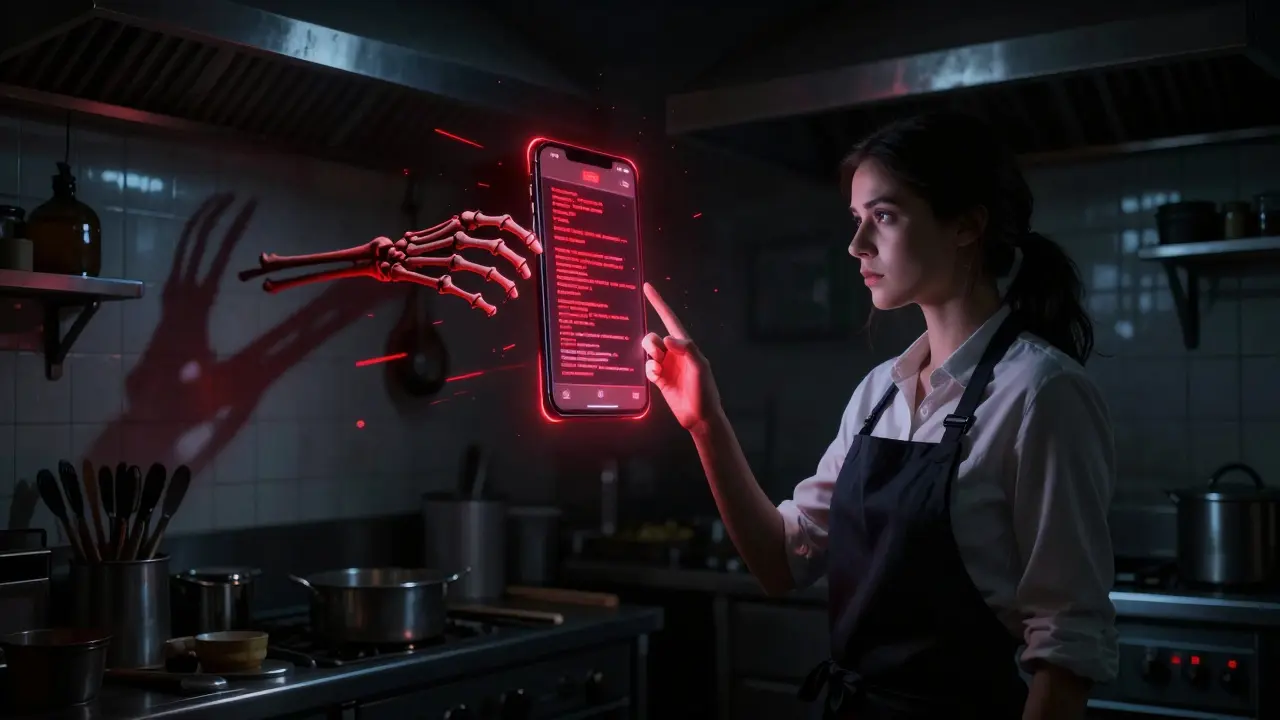
When was the last time someone in your company built something that made real money-without writing a single line of code? Not a developer. Not an engineer. Someone who never took a programming class. Someone who just knew their business inside out-and used AI to turn that knowledge into an app that actually worked?
That’s not science fiction. It’s happening right now. And if you’re not telling these stories inside your organization, you’re missing one of the most powerful tools for change we’ve seen in years.
What Vibe Coding Really Means
Vibe coding isn’t about replacing developers. It’s about giving people who know their work better than any outsider the power to build solutions themselves. It’s using tools like Lovable, Cursor, v0, and Claude to turn a spoken idea into a working app-no terminal, no syntax errors, no waiting months for a dev team.
Think of it like this: instead of explaining your problem to someone who’s never worked in your industry, you describe it in plain language to an AI. It asks clarifying questions. You answer. It builds. You test. You tweak. In days, not months.
This isn’t just for tech startups. It’s for the jewelry maker who couldn’t afford a website. The personal trainer whose clients kept forgetting their routines. The restaurant owner drowning in third-party delivery fees. These aren’t edge cases. They’re everyday business problems-and vibe coding solved them.
The Stories That Matter
Let’s talk about Maria, the Italian restaurant owner in Manchester. She was losing 30% of every takeaway order to delivery apps. She asked a developer for a quote. The answer? $15,000. She said no. Instead, she used a visual builder. Three weeks later, her customers could order directly from her phone. No middlemen. No commissions. Within two months, her takeaway orders jumped 60%. The app paid for itself in the first month. She added loyalty points. Then table reservations. Then inventory tracking. All without hiring anyone.
Then there’s Marcus, the personal trainer. He spent half his sessions re-explaining workout plans. He built an app in six weeks. Booking system. Progress tracking. Payments. Not because he knew JavaScript. Because he knew his clients. The app didn’t just help his clients-it became a product other trainers wanted to buy. He turned a pain point into a subscription business.
And Sarah? The jewelry maker. She built an e-commerce app with a photo gallery, checkout, and messaging system. In three months, she made more sales than in the entire previous year. No inventory system. No fancy analytics. Just enough to start-and then grow from real feedback.
These aren’t outliers. They’re patterns. And they all follow the same rule: deep domain knowledge + rapid prototyping = unstoppable momentum.
Why Internal Stories Beat Internal Memos
Most companies spend hours crafting slides about innovation, digital transformation, and agility. But no one remembers them. Why? Because they’re abstract.
Stories like Maria’s? They stick. They’re human. They’re specific. They show:
- Speed: 3 weeks instead of 6 months
- Savings: $15,000 in developer fees eliminated
- Revenue: 60% increase in direct sales
- Control: Full ownership of customer relationships
When you tell these stories in team meetings, Slack channels, or company newsletters, you’re not just sharing wins-you’re changing what people believe is possible.
Imagine a marketer who’s always been told, “We need engineering to build that.” Now they see a colleague in customer service build a lead magnet tool in two days using Cursor. Suddenly, the barrier isn’t skill-it’s mindset.

The Hidden Ingredient: Real User Feedback
What made these apps work wasn’t the AI. It was the feedback loop.
Maria didn’t wait for a beta group. She tested every change with her regular customers. One person said, “I wish I could save my favorite dishes.” She added a favorites button. Another said, “Can I book for two people?” She added group reservations. Each tweak took minutes. Each one increased value.
This is the opposite of traditional software development, where teams spend months building something no one asked for. Vibe coding flips that. Start small. Build one thing that solves one real problem. Launch. Listen. Improve.
That’s how Connor Burd built an app in two weeks that hit $20,000/month in revenue. He didn’t have a business plan. He had a problem he wanted to solve-and a tool that let him move fast.
Who Can Do This?
You don’t need to be a coder. You don’t need a CS degree. You don’t even need to be tech-savvy.
You need to:
- Understand your customers’ frustrations
- Be willing to try something new
- Accept that “good enough” today is better than “perfect” in six months
Paulius Masalskas, founder of CreatorHunter, says he “sucked at” coding. He built a platform that now brings in $30,000/month-without writing code. He used AI prompts. He iterated. He listened. That’s it.
Even people with some coding background say they’re faster now. Andy Keil and Kyle Ledbetter used Lovable to prototype, Cursor to refine, and shipped multiple enterprise tools. Tim Metz built an SEO calculator lead magnet for his marketing team. Alfred Megally turned Spotify playlists into physical postcards. Robinson Greig built a tool to send voice memos to your future self.
The tool doesn’t care if you’ve never typed a command. It only cares if you can describe the problem clearly.
How to Start Telling These Stories
If you want to shift your company’s culture, start by collecting these stories. Don’t wait for a big win. Start small.
Ask these questions in your next team meeting:
- Has anyone built something recently that solved a problem faster than expected?
- Did anyone use an AI tool to create something without asking for developer help?
- What’s one thing you wished you could automate-but thought you couldn’t because you’re not technical?
Then celebrate it. Share screenshots. Show before-and-after metrics. Record a 90-second video of the person explaining how they did it.
Don’t wait for the CTO to approve a budget. Don’t wait for a pilot program. Just start sharing what’s already working.
The Bigger Picture
This isn’t just about tools. It’s about power.
For decades, the people who understood the business were stuck waiting for the people who understood code. That imbalance created delays, misaligned priorities, and wasted money.
Vibe coding changes that. It gives the people closest to the problem the power to fix it. And when that happens, innovation stops being a department. It becomes a habit.
The restaurant owner didn’t need to be a developer. She just needed to know her customers. The trainer didn’t need to be a product manager. He just needed to know what his clients forgot.
What’s your team’s version of that?
Start telling those stories. Not because they’re impressive. But because they’re true. And truth moves faster than any slide deck ever could.
Do you need to know how to code to do vibe coding?
No. Vibe coding is built for people without coding experience. Tools like Lovable, Cursor, and v0 use natural language and drag-and-drop interfaces to turn ideas into working apps. People like Maria (restaurant owner) and Sarah (jewelry maker) had zero coding background but built fully functional apps in weeks. The key isn’t technical skill-it’s understanding your users’ problems well enough to explain them clearly to AI.
Can vibe coding really replace hiring developers?
It doesn’t replace them-it reshapes when and why you need them. For small, focused projects that solve specific internal problems-like a booking system, a lead magnet, or a customer feedback tool-vibe coding often does the job faster and cheaper. But for large-scale, complex systems like enterprise databases or security-critical infrastructure, developers are still essential. Vibe coding excels at rapid iteration for business-driven features, not system-level engineering.
What if the app I build breaks or has bugs?
Most vibe coding tools let you edit and redeploy in minutes. Unlike traditional software, where a bug might take days to fix, you can often tweak the design, re-prompt the AI, and relaunch the same day. Many tools also offer templates, pre-built components, and guided workflows that reduce errors. Start simple. Test with real users early. Small fixes are part of the process-not a failure.
Is vibe coding just a trend, or is it here to stay?
It’s not a trend-it’s the next evolution of how work gets done. Just like spreadsheets replaced manual ledgers, and email replaced fax machines, AI-powered development tools are replacing the old gatekeeping model of software creation. Companies that embrace this shift are seeing faster innovation, lower costs, and more engaged teams. The tools are improving rapidly, and adoption is growing across industries-from retail to healthcare to education.
How do I convince my team to try vibe coding?
Show them real examples. Play them a 60-second video of someone in your company building an app in two days. Share the before-and-after numbers: “Maria saved $15,000 and increased sales by 60%.” Offer a 30-minute workshop using a free tool like Lovable or v0. Let them build something simple-like a contact form or a survey. The moment they see their idea become real, the doubt turns into curiosity.

Sandy Dog
March 19, 2026 AT 05:37OMG I CRIED WHEN I READ MARIA’S STORY 😭😭😭 I literally screamed at my desk when she said "60% increase in direct sales"-like, I’ve been stuck in meetings about "digital transformation" for THREE YEARS and no one ever showed me a REAL person doing something this cool. I just built a simple Notion page for my yoga clients using Cursor and now they’re booking 4x more sessions. I didn’t even know what a prompt was two weeks ago. I just typed: "Make me a way for clients to book and see their routine." And boom. App. 💥
Nick Rios
March 20, 2026 AT 06:16This is one of the most thoughtful pieces I’ve read in a long time. I work in HR and I’ve seen too many teams shut down innovation because "it’s not in our job description." But stories like Marcus’s and Sarah’s? They don’t ask for permission. They just build. And that’s the real shift-not the tools, but the mindset. When people realize they don’t need to wait for approval to solve a problem they see every day, that’s when culture changes. No slide deck can do that.
Amanda Harkins
March 20, 2026 AT 18:25There’s something quietly revolutionary about this, isn’t there? Not the tech. Not the AI. But the quiet normalization of agency. For so long, the people who knew the pain-the restaurant owner, the trainer, the jeweler-were told they weren’t "qualified." But qualification was never about syntax. It was about intimacy with the problem. And now, the tools are finally catching up to that intimacy. I’ve been waiting for this. Not because I want to code. But because I want to fix things. Without asking for a ticket number.
Johnathan Rhyne
March 20, 2026 AT 21:48Okay, hold on. Let’s get real. This isn’t "vibe coding"-it’s just using AI like a glorified copy-paste machine with a pretty UI. And let’s not pretend Maria didn’t have help. Someone *had* to set up the payment gateway. Someone *had* to secure the server. Someone *had* to write the terms of service. You’re romanticizing automation while ignoring the invisible labor behind it. Also, "no syntax errors"? Bro, you think AI doesn’t spit out garbage? I’ve seen 17-year-olds build "apps" that leak user data because they "just asked the AI." This isn’t empowerment. It’s a liability waiting to happen. And don’t get me started on "no coding needed"-you’re just outsourcing your ignorance to a black box.
Jawaharlal Thota
March 21, 2026 AT 09:59I want to say something important here. Vibe coding isn’t about replacing developers-it’s about removing the gatekeepers. I’ve seen too many brilliant people in small businesses in India and Indonesia get stuck because they can’t afford a dev team. One woman in Jaipur built a WhatsApp-based inventory tracker for her tailoring shop using Lovable. She didn’t even know what a "prompt" was. She just said, "I need to know when I’m running out of thread." And it worked. The tool didn’t care if she had a degree. It only cared that she knew her customers. That’s the magic. And if your company isn’t celebrating these moments, you’re not just falling behind-you’re ignoring the heartbeat of real innovation.
Lauren Saunders
March 23, 2026 AT 07:39How quaint. Another Silicon Valley fairy tale wrapped in emotional storytelling. Let’s not pretend this is scalable. Maria’s app probably crashed every time more than five people ordered. Sarah’s e-commerce site likely had zero SSL. And don’t get me started on "no coding needed"-that’s like saying you don’t need to know plumbing to fix a leak because you bought a new faucet. This isn’t democratization. It’s delusion. Real software requires architecture, testing, version control, and accountability. You can’t build a house with duct tape and hope.
sonny dirgantara
March 24, 2026 AT 23:55Andrew Nashaat
March 25, 2026 AT 20:17Let’s be crystal clear: this isn’t "vibe coding." It’s "lazy prototyping"-and it’s dangerous. You’re encouraging non-technical people to deploy untested, unsecured, unmonitored tools into production. That’s not innovation-that’s negligence. Who’s responsible when Maria’s app gets hacked? Who pays for the data breach? Who audits the AI-generated code? And why are we celebrating "I built an app in three weeks" as if that’s somehow heroic? I’ve seen these "success stories" lead to compliance violations, customer data leaks, and HR nightmares. If you’re not documenting, versioning, or testing, you’re not building-you’re gambling. And your company is the casino.
Gina Grub
March 27, 2026 AT 02:27Let’s cut through the noise. This isn’t about empowerment. It’s about cost-cutting disguised as progress. The real story? Companies are using these tools to outsource development to unpaid labor-your marketing team, your HR rep, your barista who "has an idea." And when it breaks? They’ll blame the tool. Not the strategy. Not the leadership. The tools are just the latest veneer for austerity. We’re not building a future of autonomy. We’re building a future of exploitation. And if you’re celebrating this as "innovation," you’re not seeing the boardroom behind the screen.