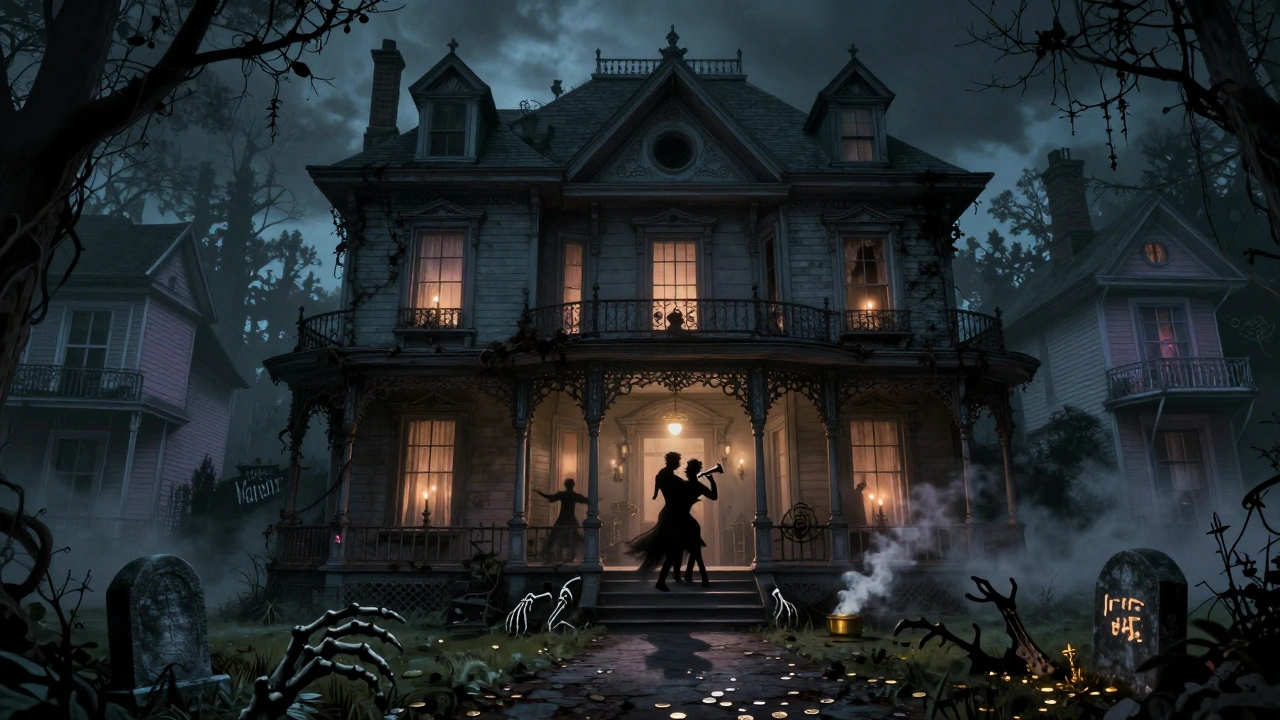
When you walk through the Marigny neighborhood in New Orleans today, you hear jazz spilling from open doors, smell beignets frying, and see colorful shotgun houses painted in pastels. Few people know the name behind the streets they stroll - Bernard Xavier Philippe de Marigny. He wasn’t a politician, a general, or a famous artist. But his choices shaped the soul of one of America’s most unique cities.
From French Nobility to Louisiana Landowner
Bernard de Marigny was born in 1785 in Saint-Domingue, now Haiti, into a family of French colonial nobility. His father, Jean-Baptiste de Marigny, owned sugar plantations and held titles in the French aristocracy. When the Haitian Revolution erupted in 1791, the family fled to New Orleans - one of thousands of refugees who changed the city’s cultural DNA.
By 1805, Bernard was 20 years old and inherited a large landholding on the eastern edge of New Orleans, just beyond the original French Quarter. This land, once swampy and mostly unused, stretched from today’s Frenchmen Street to the Mississippi River. He didn’t just hold onto it. He built on it.
At a time when most wealthy landowners kept their property as rural estates, Bernard divided his land into small lots and sold them to free people of color, Creole families, and working-class immigrants. He didn’t care about racial or social lines - he cared about cash flow. This decision turned his land into a vibrant, mixed-use community. It became one of the first neighborhoods in the U.S. where Black, white, and mixed-race residents lived side by side, not as slaves or servants, but as neighbors.
The Birth of the Marigny
By the 1820s, what was once called ‘Marigny’s Addition’ had become a bustling suburb. He laid out streets in a grid pattern - unusual for New Orleans, where the French Quarter followed winding, organic paths. He even named streets after his family: Rue Marigny, Rue de la Bastille, Rue de la Louisiane. Some of those names still exist today.
He built the first public dance hall in the area, the Marigny Theatre, which hosted everything from French operas to Creole quadrilles. It was here that early jazz began to take shape - musicians from Congo Square mingled with French violinists and Spanish guitar players. The music didn’t stay in the theater. It spilled into the streets, into the courtyards, into the homes.
Unlike the rigid social codes of the French Quarter, the Marigny was wilder, freer. People danced on porches. Women wore their hair loose. Men played dice on the sidewalks. It was chaotic. It was alive. And it was entirely Bernard’s doing.
A Man of Contradictions
Bernard wasn’t a saint. He was a gambler. He lost fortunes at the tables - sometimes winning $20,000 in a single night, other times losing his entire estate. He built a mansion on Esplanade Avenue, complete with a ballroom and a private theater, then sold it off piece by piece to pay debts.
He was also a politician. He served in the Louisiana state legislature in the 1820s, where he pushed for public education and property rights for free people of color - radical ideas at the time. He even defended a free Black man accused of murder in court, arguing that the law should apply equally. The jury acquitted the man. The crowd cheered. The press called it a scandal.
He married twice. His first wife, Louise d’Arenberg, was a Creole heiress. After she died, he married a free woman of color named Marie Thérèse Metoyer - a move that shocked polite society. They had five children together. He never hid them. He educated them. He left them property.
His life was a series of contradictions: nobleman and rebel, aristocrat and democrat, gambler and philanthropist. He didn’t fit into the boxes people wanted to put him in. And that’s why he mattered.
What He Left Behind
Bernard de Marigny died in 1868, poor and largely forgotten. His mansion was torn down. His name faded from official records. But his neighborhood didn’t disappear.
The Marigny became a refuge for musicians after the Civil War. When the Storyville district closed in 1917, jazz musicians moved here - Louis Armstrong, Jelly Roll Morton, Sidney Bechet all lived or played in the area. The buildings he sold to working families in the 1820s became the homes of generations of artists.
Today, the Marigny is one of the most culturally dense neighborhoods in the country. It’s home to Frenchmen Street, where live music happens every night. It’s where the Mardi Gras Indians rehearse. It’s where Creole cuisine evolved - dishes like gumbo and jambalaya that blend African, French, Spanish, and Native American flavors.
His name is on street signs. His face appears on historical plaques. But most people don’t know the story. They just feel it - the rhythm, the mix, the freedom.
Why He Still Matters
Bernard de Marigny didn’t set out to create a cultural revolution. He just wanted to make money. But by allowing people of all backgrounds to live, build, and create together, he accidentally built something far bigger: a model of integration decades before the Civil Rights Movement.
His neighborhood didn’t just survive - it thrived because he didn’t try to control it. He didn’t enforce segregation. He didn’t demand conformity. He gave people space, and they filled it with music, food, art, and life.
Compare that to other American cities in the 1800s, where racial lines were rigidly drawn. In New Orleans, thanks to Bernard, they weren’t. That’s why the city’s culture is so unique. That’s why jazz was born here, not in Chicago or New York.
He’s not in history books the way Andrew Jackson or Thomas Jefferson is. But if you listen to a trumpet solo on Frenchmen Street, or taste a plate of crawfish étouffée in a backyard kitchen, you’re tasting his legacy.
Where to Find His Footprints Today
- Marigny Triangle - The heart of the neighborhood, bounded by Frenchmen, Elysian Fields, and St. Claude. Look for the historic brick homes with iron balconies - many were built on lots he sold in the 1820s.
- St. Claude Avenue - Once a dirt road he laid out to connect his land to the city center. Now it’s a hub for street art and independent music venues.
- St. Peter Street - The original boundary of his land. You’ll still find Creole cottages here, some with original hand-carved shutters.
- St. Louis Cemetery No. 3 - Where Bernard is buried. His grave is unmarked, but nearby is a family plot with the Marigny name. Locals leave coins on the stones - a quiet tribute.
There’s no museum dedicated to him. No statue. But if you walk through the Marigny on a Friday night, when the saxophone is wailing and the crowd is dancing barefoot on the pavement, you’re standing in the space he created - not by design, but by daring to let people be themselves.
Who was Bernard Xavier Philippe de Marigny?
Bernard Xavier Philippe de Marigny was a French Creole nobleman and landowner in early 19th-century New Orleans. He inherited land east of the French Quarter and subdivided it into lots sold to people of all races and classes, creating the Marigny neighborhood. He was also a gambler, politician, and advocate for racial equality in property rights, despite his aristocratic background.
Why is the Marigny neighborhood named after him?
The Marigny neighborhood is named after Bernard de Marigny because he owned the land and was the first to develop it as a residential area. He laid out streets, sold lots, and built infrastructure that turned swampy farmland into a thriving suburb. His name stuck because he was the driving force behind its creation.
Did Bernard de Marigny own slaves?
Yes, early in his life, Bernard inherited enslaved people from his family’s plantations in Saint-Domingue. But by the 1820s, he had freed them and employed them as paid laborers. He also sold property to free people of color - a rare act in the antebellum South. His personal actions contradicted the norms of his class.
What role did he play in the development of jazz?
Bernard didn’t create jazz, but his neighborhood became its birthplace. By allowing mixed-race communities to live and socialize freely, he created the cultural conditions where African rhythms, French melodies, and Spanish harmonies blended. The Marigny’s dance halls and street gatherings were early incubators for the music that became jazz.
Is there anything left of Bernard de Marigny’s original buildings?
No original buildings owned by Bernard survive today. His mansion was torn down in the 1880s. But many of the homes built on lots he sold in the 1820s still stand - especially along St. Peter, Frenchmen, and Elysian Fields Streets. These are the real relics of his legacy.