The days when you hired developers solely for their ability to memorize syntax are over. In 2026, vibe coding is a paradigm shift where AI tools translate natural language into functional code, fundamentally changing who you need on your team. If you are still building a tech stack based on traditional coding proficiency alone, you are likely wasting money and slowing down delivery.
Vibe coding isn't just a buzzword; it is the new reality. Platforms like Manus and Lovable.dev allow teams to describe functionality-like "Create a bright blue Submit button"-and get working code instantly. According to SynergyLabs' 2025 industry survey, 78% of enterprise development teams have already adopted some form of this workflow. The result? Development cycles are accelerating by 60-75%. But here is the catch: speed without the right human oversight leads to chaos.
Why Traditional Hiring Models Are Failing Now
You might think vibe coding means you can fire half your engineering team. Think again. Teams that tried to replace developers with pure AI generation faced a harsh reality: 37% higher rework rates and 47% higher technical debt within 18 months, according to Adam Smith, CTO of SynergyLabs. Why? Because AI generates code fast, but it doesn't understand context, legacy constraints, or security implications unless guided by an expert.
The problem isn't the lack of code; it's the lack of judgment. A junior developer might type out a loop perfectly, but if they don't understand why that loop is inefficient or insecure, vibe coding amplifies their ignorance. The AI becomes a mirror, reflecting the user's intent. If the intent is vague, the code is broken. This is why the old metric of "lines of code written" is dead. The new metric is "quality of prompts delivered" and "effectiveness of validation performed."
The New Core Roles: Who You Must Hire
To succeed in this era, you need to rethink your org chart. Based on data from Noca AI and MIT’s Work of the Future report, these are the specific roles that deliver value today:
- The Hybrid Engineer: This person writes code AND prompts. They use vibe tools for boilerplate and rapid prototyping but step in to debug complex logic. They are the backbone of your team.
- The AI Code Auditor: As AI-generated code enters production, someone must verify it. These auditors check for security vulnerabilities, compliance issues, and efficiency. Certified professionals command median salaries of $165,000 in 2025.
- The Prompt Architect: Not just anyone can write effective prompts. These specialists craft precise natural language instructions that yield high-quality code. They understand how different models interpret ambiguity.
- The Vibe-to-Code Transition Specialist: Prototypes are great, but production systems need structure. These experts convert AI-generated drafts into maintainable, tested, CI/CD-integrated codebases.
Justin, author of the Technically.dev 2026 Tool Comparison, found that the most effective teams maintain a ratio of 60% traditional developers, 30% hybrid specialists, and 10% pure vibe operators. Deviating too far from this balance risks either stagnation (too many traditionalists) or instability (too many vibe-only users).
Skill Shifts: What Matters More Than Syntax
If you are interviewing candidates, stop asking them to reverse a binary tree on a whiteboard. Start asking them to explain how they would validate an AI-generated API endpoint. The skills landscape has flipped.
| Skill Area | Traditional Importance (2024) | Current Importance (2026) | Key Reason for Change | |
|---|---|---|---|---|
| Syntax Memorization | Critical | Low | AI handles syntax errors automatically | |
| Prompt Precision | N/A | Critical (4.2/5) | Vague prompts cause 31% of failures | |
| System Architecture | High | Very High | Humans must design the system AI builds | |
| Hybrid Debugging | Medium | Critical (4.7/5) | AI outputs require human verification | |
| Communication | Medium | High | Bridging gap between non-tech stakeholders and AI |
Emergent.sh’s 2026 guide notes that developers who spend two or more hours weekly practicing natural language descriptions see 55% better results with vibe tools. It is not about typing faster; it is about thinking clearer. Your best engineers will be those who can articulate business requirements so precisely that the AI understands the nuance.
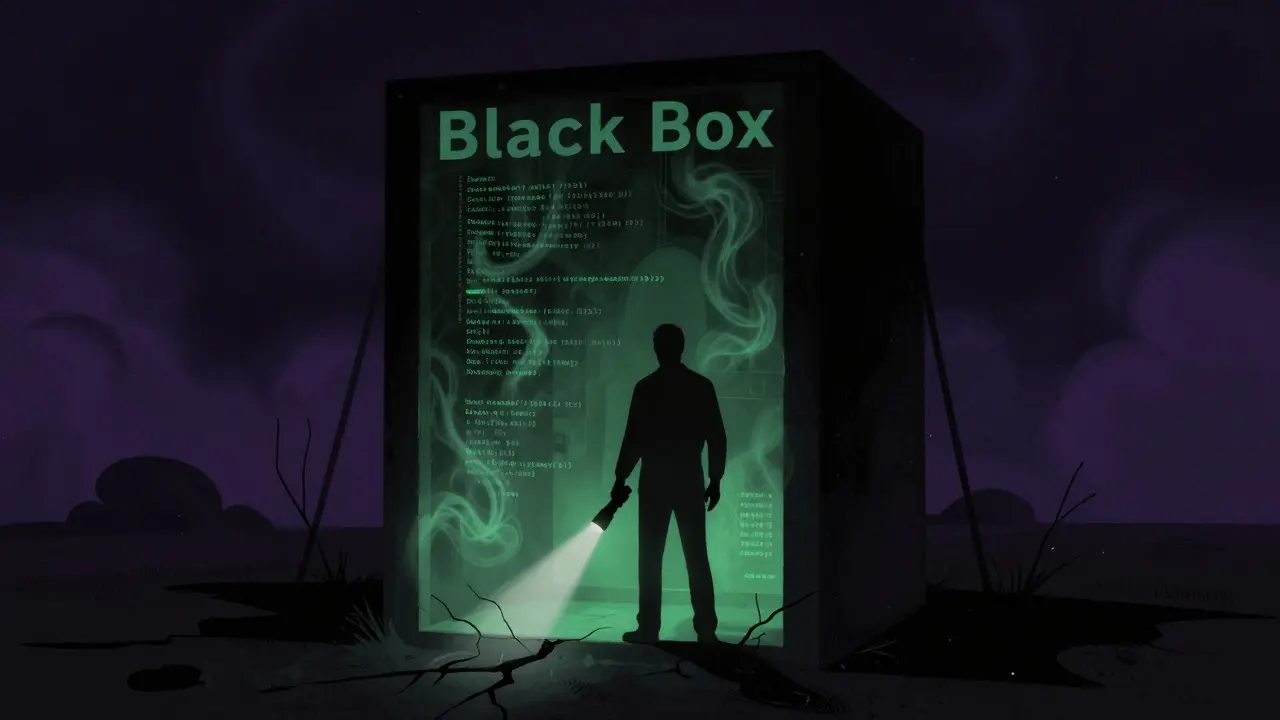
Avoiding the "Black Box" Trap
One of the biggest risks in vibe coding is knowledge atrophy. When teams rely entirely on AI to generate code, they lose touch with the underlying mechanics. HackerNews discussions reveal that 68% of senior developers believe traditional coding skills remain essential because "the AI can't fix what you don't understand."
We saw this play out in a 2025 fintech case study where unvetted AI-generated code created 17 compliance violations. Fixing them took 340 engineering hours. The root cause? The team had no one who understood the regulatory framework well enough to prompt the AI correctly or audit the output. To prevent this, implement "No-AI Fridays" where developers write code manually to keep their core skills sharp. Also, mandate code review sessions where every line of AI-generated code is explained by a human before merging.
Implementation Strategy: Phasing In Vibe Coding
Don't flip a switch overnight. Emergent.sh documents that organizations typically need 8-12 weeks for effective onboarding. Junior developers adapt quickly (3-4 weeks), but senior engineers often take 6-8 weeks to overcome ingrained habits.
- Start with Prototyping: Use tools like Bolt.new or Lovable.dev for MVPs and internal tools. This low-risk environment lets teams learn prompt engineering without breaking production.
- Create "Vibe Buddy" Pairs: Pair a traditional developer with a vibe specialist. SynergyLabs reports this reduces the learning curve by 41%.
- Invest in Training: Focus on prompt precision and AI output validation. Gartner predicts that by 2027, 85% of mid-to-senior roles will require prompt engineering certifications.
- Establish Governance: Define which parts of the codebase can be AI-generated and which require human-only implementation (e.g., security modules, financial calculations).
Remember, the goal is not to let AI do everything. It is to let AI do the boring stuff so your humans can do the important stuff. Dr. Elena Rodriguez from MIT’s AI & Work Research Lab emphasizes that treating AI as an assistant, not a replacement, yields 63% higher productivity gains.
Cost Considerations and ROI
Talent strategy also includes budget management. Manus’ enterprise tier costs $45/user/month, while Lovable’s Pro plan runs $99/user/month. These are significant recurring costs. You need to justify them through output quality, not just speed.
Teams adopting hybrid approaches reduce production bugs by 32% compared to pure vibe coding implementations. That bug reduction translates directly to saved engineering hours and happier customers. Calculate your ROI based on reduced time-to-market (28% faster for hybrid teams) and lower maintenance costs, not just the license fee.
Future-Proofing Your Team
By 2027, Forrester predicts that 90% of development organizations will require multi-agent orchestration skills. This means your engineers won't just talk to one AI model; they will manage coordinated systems of agents. Prepare now by hiring people who are curious, adaptable, and strong communicators. The "T-shaped professional"-with broad vibe coding expertise and deep traditional development skills-is the safest bet against displacement. Pure prompters face 42% higher job insecurity due to platform commoditization, while hybrid engineers have 87% lower displacement risk.
What is vibe coding exactly?
Vibe coding is a development approach where AI-powered tools translate natural language prompts into functional code. Instead of writing syntax manually, developers describe the desired outcome, and the AI generates the implementation. Tools like Manus and Lovable.dev lead this space.
Do I still need traditional programmers?
Yes, absolutely. While AI handles boilerplate and initial generation, traditional programming skills are critical for debugging, architecture design, and validating AI output. Teams without strong technical oversight face higher technical debt and rework rates.
What is the most important skill for developers in 2026?
Prompt precision and hybrid debugging are currently rated as the most critical skills. Developers must know how to ask the AI the right questions and then verify the answers using traditional coding knowledge.
How long does it take to onboard a team onto vibe coding?
Effective onboarding typically takes 8-12 weeks. Junior developers may adapt in 3-4 weeks, while senior engineers often need 6-8 weeks to adjust their workflows and overcome ingrained coding habits.
Is vibe coding safe for production environments?
It can be, but only with strict human oversight. Pure AI-generated code often contains subtle bugs or security flaws. Successful production deployments require AI Code Auditors and Hybrid Engineers to validate and refine the output before release.
What are the costs associated with vibe coding platforms?
Enterprise pricing varies by platform. For example, Manus charges around $45 per user per month, while Lovable.dev's Pro plan is approximately $99 per user per month. These costs should be weighed against the 60-75% acceleration in development cycles.