The Core Trade-off: Proprietary vs. Open Weights
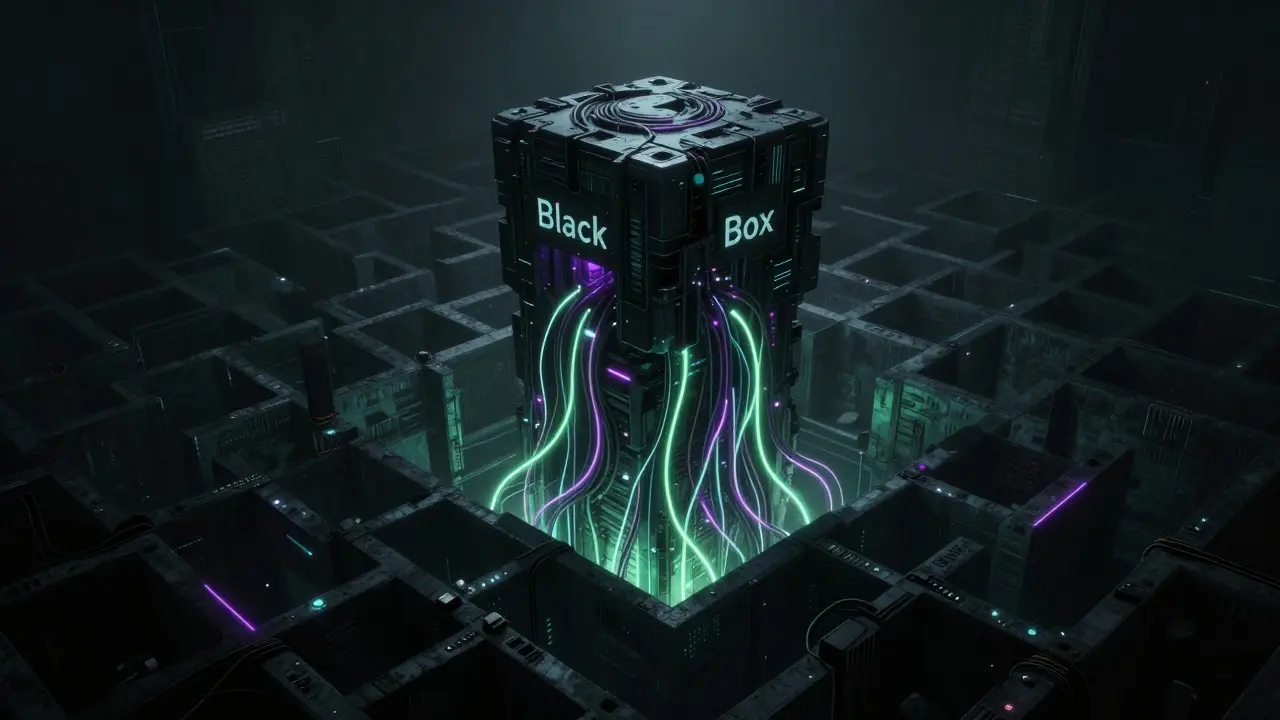
Most teams start with proprietary APIs because they work out of the box. You get high reasoning power and zero server management. But as you scale, the "convenience tax" becomes a massive operational liability.Proprietary families like OpenAI's GPT and Anthropic's Claude are essentially "black boxes." They offer incredible deep reasoning, but you're locked into their pricing and rate limits. If you're building a customer-facing app for a Fortune 500 company, this is often the safe bet. However, for startups, the cost of scaling these can be prohibitive. This is where open-weight families like Meta's Llama or Google's Gemma come in. They require you to handle the GPU provisioning and Kubernetes orchestration, but they give you total control over your data and your margins.
| Family | Primary Strength | Deployment Type | Best Use Case |
|---|---|---|---|
| GPT (OpenAI) | Deep Reasoning | Proprietary API | Complex Planning |
| Claude (Anthropic) | Writing & Safety | Proprietary API | Content Generation |
| Gemini (Google) | Multimodality | Hybrid/API | Video/Audio Analysis |
| Llama (Meta) | Versatility/Scale | Open Weights | Self-hosted Enterprise |
| Qwen (Alibaba) | Coding & Math | Open Weights | Technical Workflows |
Matching Model Size to Task Complexity
One of the biggest mistakes I see is using a massive model for a simple task. Why use a 2-trillion parameter model to summarize a three-sentence email? It's like using a semi-truck to deliver a single envelope.You need to categorize your "jobs-to-be-done." For simple extraction or classification, small models like Phi-4-mini-flash or the 1B/4B variants of Gemma 3 are often enough. They provide lightning-fast inference and cost almost nothing to run. For a middle tier-where you need nuanced understanding but not world-class logic-models like Mistral's Magistral Small (24B parameters) hit the sweet spot. Reserve the "Behemoths"-the trillion-parameter giants-for tasks that require multi-step reasoning, complex coding, or strategic planning. If the model is failing at a task, don't just throw more tokens at it; check if you're using the right size for the complexity level.
Solving the Context Window Puzzle
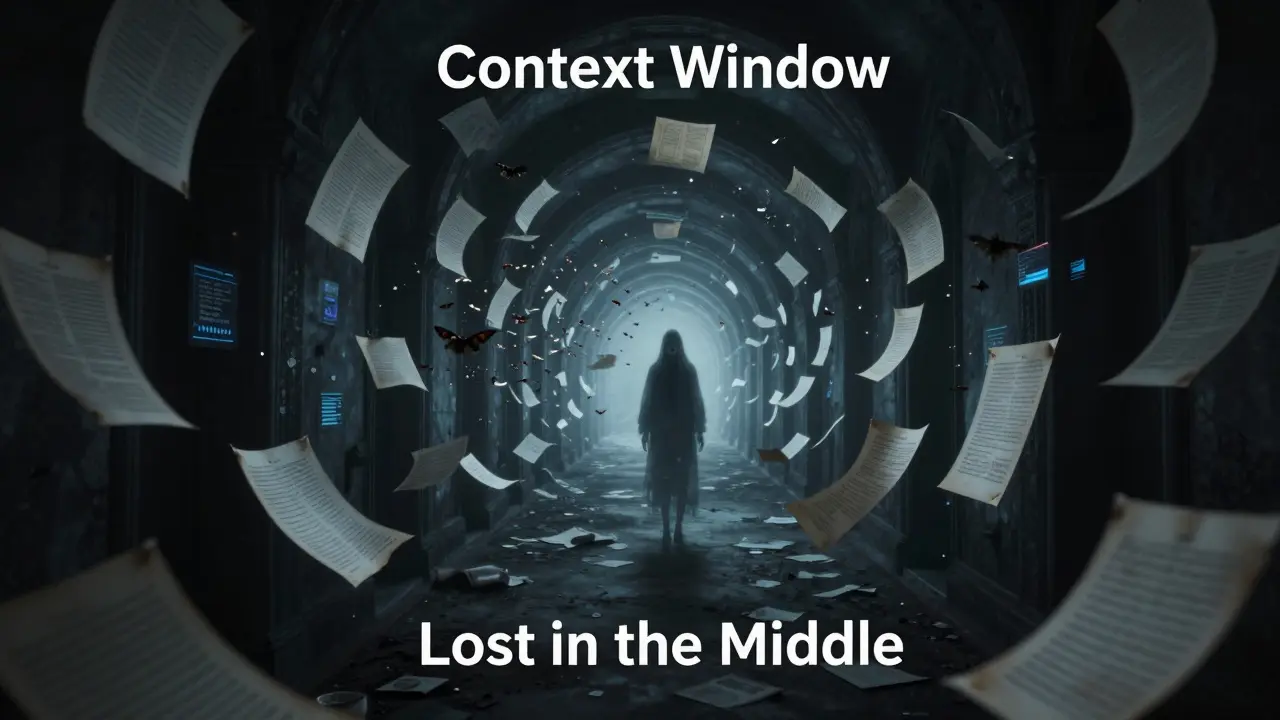
Context windows are the "working memory" of your AI. If you're building a legal AI that needs to read 500-page contracts, a 128K token window is a bottleneck.We've seen a massive explosion in context capabilities recently. While most standard models settle around 128K tokens, some specialized variants are pushing the boundaries. For instance, Llama 4 Scout has pushed the limit to 10 million tokens. This allows you to feed an entire codebase or a decade of corporate documentation into a single prompt without needing complex RAG (Retrieval-Augmented Generation) pipelines. However, remember that as the context grows, the "lost in the middle" phenomenon often kicks in-the model might forget details buried in the center of your prompt. If you're using Qwen3-Omni for million-token tasks, be wary of context overflow errors, which have become a common headache for developers implementing these massive windows at scale.

Infrastructure: The Hidden Cost of "Free" Models
Open models are "free" to download, but they aren't free to run. The learning curve for deploying a model like Llama 4 at scale is steep. You aren't just writing Python code; you're managing GPU clusters, optimizing VRAM, and tuning quantization levels to ensure the model doesn't crash your server.If your team lacks deep Kubernetes expertise or specialized GPU provisioning knowledge, a proprietary API is actually cheaper because it removes the need for a full-time ML Ops team. But if you have the infrastructure, the long-term margins of self-hosting are unbeatable. You move from paying per token to paying for electricity and hardware. For those who want a middle ground, Google's Gemini ecosystem offers caching mechanisms. Instead of paying to send the same massive context over and over, you cache it on their servers, which significantly drops the cost for repetitive, high-volume tasks.
A Decision Framework for Your AI Program
When you're deciding which family to commit to for the next 12 months, stop looking at the leaderboard and start looking at your constraints. Use this logic:- High Security / Regulated Industry: Go with Open Weights (Llama 4 or Gemma 3). Keep the data on your own metal.
- Multimodal Needs (Video/Audio): Look at Gemini 2.5 Pro. Their native multimodality is currently more seamless than the "stitched-together" approach of other families.
- Rapid Prototyping: Start with GPT-4o or Claude 3. Get to market in 3-5 days, then migrate to a smaller, specialized model once you know where the bottlenecks are.
- Technical/Coding Tools: Use DeepSeek or Qwen. Their specialized training in mathematical and code analysis domains often outperforms general-purpose models on the Coding Performance Index (CPI).
Avoiding the Vendor Lock-in Trap
The most dangerous thing you can do is build your entire product around a single model's unique quirk. If you rely on a specific formatting behavior that only exists in Claude 3, you're trapped.To keep your program scalable, build an abstraction layer. Treat the LLM as a pluggable component. Use a standardized prompt format that works across families. The gap between open and proprietary models is narrowing-Epoch AI reports that the performance difference is now only about 8-12% on the ECI benchmark. In a year, the open model you're ignoring today might be just as capable as the expensive API you're paying for now, but with a fraction of the cost.
What is the difference between a model and a model family?
A model is a specific version (like GPT-4o), while a family is the entire lineage (like the GPT family). Families usually include different sizes, such as "Mini," "Pro," and "Ultra," allowing developers to scale their needs without switching ecosystems.
How do I know if I need an open-source model or a proprietary API?
If you have strict data privacy requirements or a massive volume of requests that would make API costs explode, go open-source. If you need the highest possible reasoning power and don't have a dedicated DevOps team to manage GPUs, stick with a proprietary API.
Will using a smaller model affect the quality of my app?
Not necessarily. For narrow tasks like classification or summarization, a small model (like Phi-4) can be just as accurate as a giant one, while being significantly faster and cheaper. Only use large models for complex, multi-step reasoning.
What is the ECI benchmark?
The Epoch AI Capabilities Index (ECI) is an industry-standard metric that aggregates 39 different benchmark scores into a single number, making it easier to compare the general intelligence of different model families.
How do I handle context window overflow?
Overflow happens when your input exceeds the model's token limit. You can solve this by using models with larger windows (like Llama 4 Scout), implementing RAG to only send the most relevant chunks of data, or using a summarization loop to compress the history.



Johnathan Rhyne
April 9, 2026 AT 09:24Imagine actually thinking that an abstraction layer is a silver bullet for vendor lock-in. It's a cute little fairy tale for the mid-level architects who love over-engineering their pipelines into a complete standstill. In reality, every one of these families has such wildly divergent tokenization and quirkiness that your "standardized prompt" ends up being the lowest common denominator of mediocrity. You're basically trading a specific dependency for a generic, lukewarm mess that doesn't actually leverage the strengths of any single model. It's an absolute circus of a strategy if you ask me!
Jamie Roman
April 10, 2026 AT 09:16I've been thinking a lot about the part where the post mentions using a semi-truck to deliver an envelope, and it really resonates with how we've been handling our internal classification tasks lately. We spent way too much time trying to squeeze every bit of logic out of a massive model when we could have just fine-tuned a tiny one and saved a ridiculous amount of money on our monthly bill. It's kind of funny how we always default to the biggest tool in the shed because it feels safer, but once you actually dive into the latency numbers, you realize you're just killing your user experience for no real gain in accuracy. I think a lot of teams would benefit from just pausing and actually mapping out their jobs-to-be-done before they commit to a specific API subscription that just bleeds cash.
Lauren Saunders
April 12, 2026 AT 06:27The obsession with "open weights" is honestly just a coping mechanism for people who can't afford the top-tier reasoning of a closed system. Let's be real: the gap might be narrowing, but in the high-stakes world of actual enterprise logic, 8% isn't just a number; it's the difference between a product that works and one that hallucinated a legal clause into existence. Only those playing in the sandbox think Llama is "enough" for everything. If you're operating at a truly elite level, you pay the convenience tax because your time is worth more than the cost of a few thousand tokens.
Andrew Nashaat
April 13, 2026 AT 06:50It's frankly disgusting how many people ignore the environmental impact of running these "free" open-weight models on massive GPU clusters!!! You can't just talk about margins and electricity without mentioning the carbon footprint of heating up a data center just because you're too cheap to use an optimized API. Also, the lack of consistency in the punctuation within the table is absolutely grating... really!!! We need to be more ethical about our compute choices, period!!!
Salomi Cummingham
April 14, 2026 AT 21:37Oh my goodness, I cannot even begin to tell you how much I agree with the warning about the "lost in the middle" phenomenon because it is an absolute nightmare when you're dealing with massive datasets! I remember a project where we threw an entire corporate archive into a long-context window and the model just completely ignored the most critical piece of evidence sitting right in the center of the prompt, and it was just heartbreaking to see all that compute go to waste! It's almost like the model just decides to take a nap halfway through reading your data, and you don't even realize it until the output comes back and it's missing the one thing that actually mattered! We must be so incredibly careful and diligent when we're scaling these things, or we're just sailing blindly into a storm of misinformation and missed details!
Jawaharlal Thota
April 15, 2026 AT 15:12This approach to tiered deployment is a wonderful way to guide new developers through the complexities of AI infrastructure. By starting with the rapid prototyping phase using proprietary APIs and then gradually migrating to smaller, open-weight models as the product matures, you are essentially building a roadmap for sustainable growth. I believe this prevents a lot of burnout for the engineering teams who would otherwise be overwhelmed by Kubernetes orchestration on day one. It's about fostering a culture of learning and incremental improvement rather than rushing into a costly infrastructure mistake that could hinder the project's long-term viability. This is exactly the kind of mentorship that helps the industry move forward in a healthy way.
Jeanie Watson
April 16, 2026 AT 18:58Too many words for a basic guide.